Replacing an oil or LPG boiler with a heat pump
Replacing an oil or LPG boiler with a heat pump can bring a higher grant for off-gas homes in England and Wales. Here is what the switch costs, how running costs compare with heating oil, what happens to the oil tank and the steps from survey to switch-on.
Yes, you can replace an oil boiler with a heat pump. In England and Wales an off-gas-grid home replacing oil or liquefied petroleum gas (LPG) may qualify for a £9,000 Boiler Upgrade Scheme (BUS) grant for applications properly made 21 July 2026 to 31 March 2027, leaving £3,826 at the median price. In our example a heat pump with a seasonal efficiency (SCOP) of 2.8 costs £1,214 a year (price cap, GB average, 1 October to 31 December 2026), against £1,294 of oil at July–September 2026 prices and £772 at the 2025 average.
At a glance
- Grant. For BUS in England and Wales, £9,000 for an off-gas-grid home replacing oil or LPG (applications properly made 21 July 2026 to 31 March 2027), otherwise £7,500, if your home qualifies; your installer applies. In Scotland you apply to Home Energy Scotland and need its written offer before work starts.
- Price. A median £12,826 for grants paid in England and Wales in July to September 2026, before the grant; £3,826 once the off-gas grant is taken off, if your home qualifies.
- Running costs. At SCOP 2.8 the heat pump in our example home beats oil above about 82p a litre (electricity at the price cap, GB average, 1 October to 31 December 2026).
- Old system. For the grant the oil boiler is fully replaced, not kept as a backup. The grant rules don't cover the tank, which is normally emptied and taken away; agree with your installer who does it.
- LPG. No official price series, so a formula: at SCOP 2.8 and the same electricity rate, the heat pump matches LPG at about 57.6p a litre.
Can a heat pump replace an oil boiler?
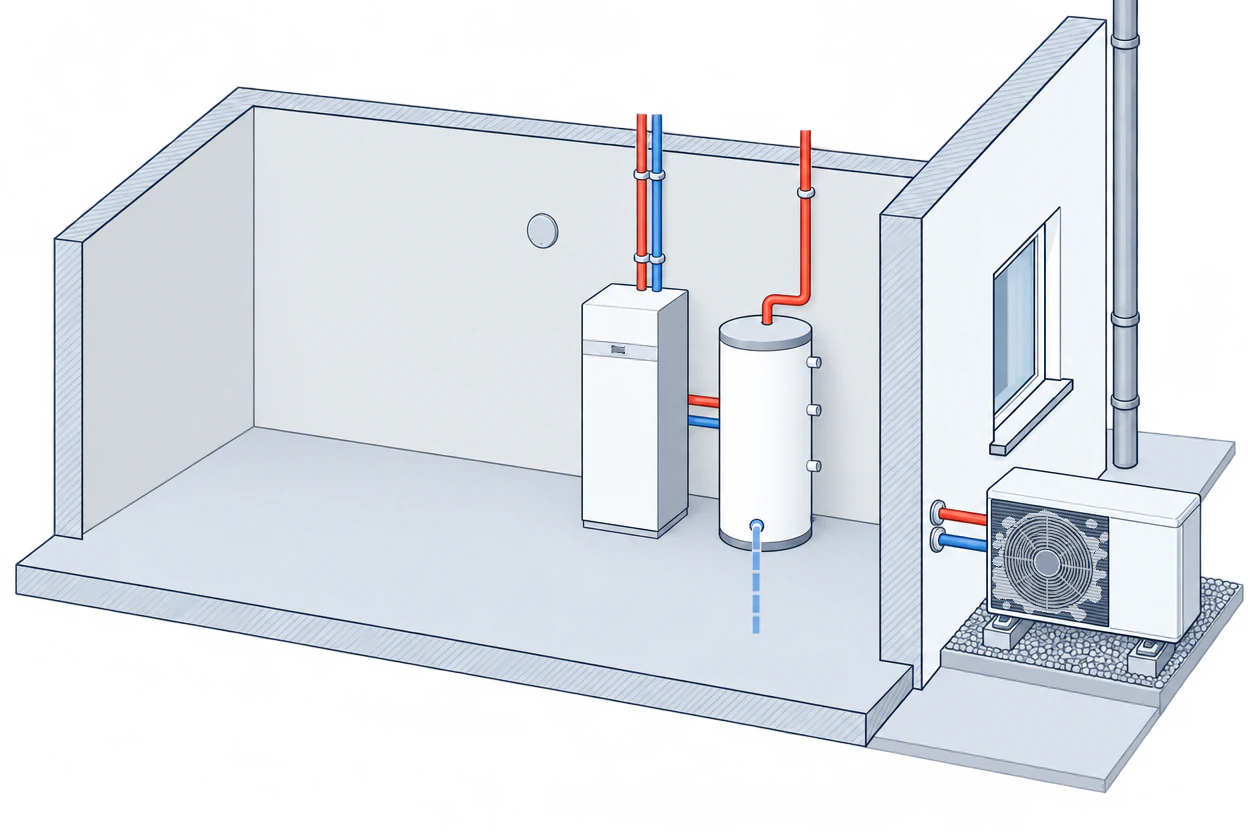
Yes. An air source heat pump heats water for your radiators and taps, as an oil boiler does, using electricity and heat from the outside air. Of the 96,611 Boiler Upgrade Scheme grants paid in England and Wales to the end of September 2026, 18% replaced oil heating and 3% LPG. What changes:
- An outdoor unit. It stands on a base or wall brackets and needs free airflow.
- Hot water from a cylinder. The heat pump heats a stored cylinder; the design says whether you need a new one.
- Lower flow temperatures. A heat pump runs best on cooler radiator water than an oil boiler, so some rooms may need larger radiators. Whether your house suits one is in is my home suitable for a heat pump.
Before work starts, an installer certified by the Microgeneration Certification Scheme (MCS) must give you the design in writing, including each room's heat loss, the radiators, the design flow temperature and the expected SCOP (heat delivered per unit of electricity over a year).
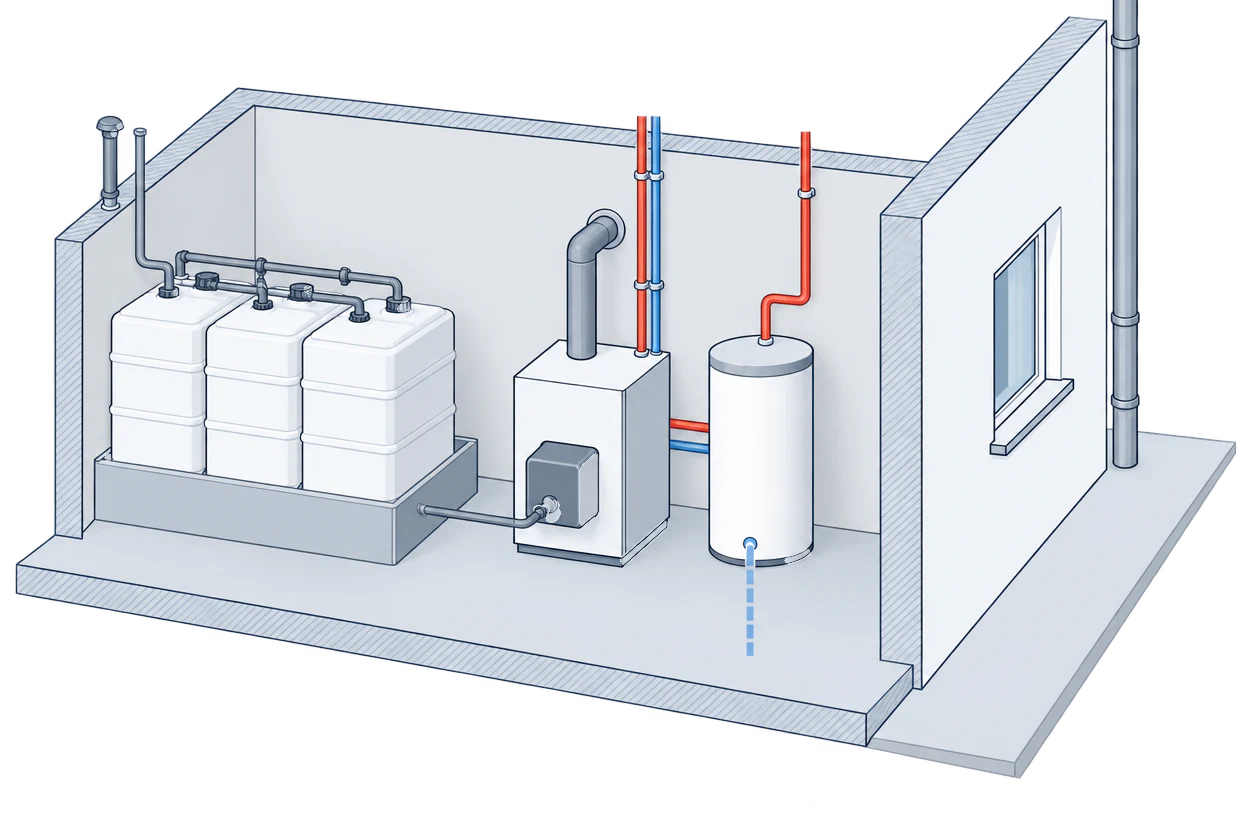
When to switch: grant window, oil prices and your boiler
While your oil boiler works, three things shape the sums:
- The grant window. In England and Wales the off-gas grant covers applications properly made by 31 March 2027, and 0% VAT on a heat pump supplied and installed in your home applies until 31 March 2027 too, then 5%. Neither is a deadline for your boiler.
- Oil prices. Heating oil and LPG are outside the Ofgem price cap and can change quickly. The Department for Energy Security and Net Zero (DESNZ) measured liquid-fuel prices 90.2% higher in real terms in April–June 2026 than a year earlier.
- Your boiler. If it is due for replacement, compare a heat pump with a new oil boiler, and get quotes before it fails.
| Option | Keep oil | New oil boiler | Heat pump |
|---|---|---|---|
| Fuel price | heating oil, outside the price cap | heating oil, outside the price cap | electricity, price cap reset every three months |
| Energy a yearOur example home: 12,920 kWh of heat a year; oil from the 2025 average to the September 2026 price, heat pump at SCOP 2.5 to 3.1 and 26.32p/kWh (price cap, GB average, 1 October to 31 December 2026) | £772–£1,514 | depends on the oil price | £1,097–£1,360 |
| Oil tank | stays; guidance for England advises a yearly inspection | stays | taken out of use: emptied, then normally removed |
What it costs: installed price and the off-gas grant
For grants paid in England and Wales in July to September 2026, the median air source heat pump job cost £12,826 before the grant, half of them between £10,717 and £15,461: prices MCS installers reported under the Boiler Upgrade Scheme, VAT included. A larger house may need a bigger unit; prices by size are in heat pump cost.
| Item | Basis | Amount |
|---|---|---|
| Median installed price | grants paid July–September 2026, before the grant | £12,826 |
| Off-gas grant | England and Wales, home replacing oil or LPG, applications properly made 21 July 2026 to 31 March 2027, if your home qualifies | −£9,000 |
| You pay at the median | £12,826 − off-gas grant, if your home qualifies | £3,826 |
| You pay for a 10–12 kW unit | £13,948 (grants paid April 2025 to March 2026) − off-gas grant, if your home qualifies | £4,948 |
"Off the gas grid" is strict: no mains gas, no record of a gas meter point at the property, no heat network and not a new build. A home with a mains gas meter point, even a capped or clamped one, can't get the off-gas grant, though the standard £7,500 may still apply if it qualifies. Self-builds get £7,500 at most. Your installer supplies evidence such as an Energy Performance Certificate (EPC), oil or LPG bills or boiler photos and confirms whether you may qualify; Ofgem decides. The voucher steps are in heat pump grants.
| Nation | Support for an oil or LPG home | Who applies |
|---|---|---|
| England and Wales | Boiler Upgrade Scheme, including the off-gas grant for homes replacing oil or LPG | your installer, before work starts |
| Scotland | Home Energy Scotland: a grant and an optional interest-free loan, amounts in Home Energy Scotland grants and loans | you, with a written offer before any work |
| Northern Ireland | no Boiler Upgrade Scheme; some lower-income owner-occupiers can get a fully funded heat pump through schemes under NISEP, Northern Ireland's energy-saving programme | through the scheme |
In Scotland, Home Energy Scotland funds only a heat pump that provides all your heating and hot water, so with its funding the oil boiler goes too.
Running costs: heat pump against heating oil
Our example home is a detached house in England, off the gas grid, with 149 m² of floor space (the English Housing Survey average for a detached house), radiators and a working oil boiler. We use the median gas use of detached houses in England and Wales, 102 kWh per m², as a stand-in for the fuel an oil house burns: about 15,200 kWh, or 1,480 litres of kerosene, a year; we assume 85% becomes heat. It is an illustration, not a forecast:
- Heat needed: 1,480 litres × 10.28 kWh a litre ≈ 15,200 kWh of fuel; × 85% = 12,920 kWh of heat a year.
- Heat pump electricity: 12,920 kWh ÷ SCOP 2.8 = 4,614 kWh.
- Cost: 4,614 kWh × 26.32p = £1,214 a year. The oil costs 1,480 litres × 87.43p = £1,294.
SCOP 2.8 is close to the 2.78 median measured across 428 air source heat pumps in the government-funded Electrification of Heat trial. Electricity is the Ofgem price cap for 1 October to 31 December 2026 (GB average, direct debit, no VAT on electricity in Great Britain until 31 March 2027); oil is the government's typical retail price for deliveries of up to 1,000 litres, VAT included, and larger orders can cost less a litre. Standing charges are left out.
| Heating | Calculation | Cost a year |
|---|---|---|
| Oil, 2025 average | 1,480 litres × 52.14p | £772 |
| Oil, July–September 2026 | 1,480 litres × 87.43p | £1,294 |
| Oil, September 2026 | 1,480 litres × 102.31p | £1,514 |
| Heat pump, SCOP 2.5 | 12,920 kWh ÷ 2.5 × 26.32p | £1,360 |
| Heat pump, SCOP 2.8 | 12,920 kWh ÷ 2.8 × 26.32p | £1,214 |
| Heat pump, SCOP 3.1 | 12,920 kWh ÷ 3.1 × 26.32p | £1,097 |
Energy cost a year, our example home
| Heating | Heating oil | Heat pump |
|---|---|---|
| Oil, 2025 average | £772 | |
| Oil, Jul–Sep 2026 | £1,294 | |
| Oil, Sep 2026 | £1,514 | |
| Heat pump, SCOP 2.5 | £1,360 | |
| Heat pump, SCOP 2.8 | £1,214 | |
| Heat pump, SCOP 3.1 | £1,097 |
At the July to September 2026 oil price the heat pump costs £79 a year less than oil at SCOP 2.8, £197 less at 3.1 and £66 more at 2.5; at the September 2026 price, £300 less at 2.8. At the 2025 average, oil was cheaper at every SCOP shown.
Each litre of oil gives our example home 8.73 kWh of heat (12,920 ÷ 1,480), so the heat pump matches oil at a SCOP of 8.73 × 26.32 ÷ the oil price in pence: 2.63 at 87.43p, 2.25 at 102.31p and 4.41 at 52.14p. Turned round, at SCOP 2.8 it wins whenever oil costs more than £1,214 ÷ 1,480 litres, about 82p a litre.
The cap is reset every three months. Whole bills and standing charges are in heat pump running costs.
Does a heat pump pay back against oil?
If your oil boiler still works, the whole £3,826 left after the off-gas grant has to come back: £3,826 ÷ £79 ≈ 48 years at SCOP 2.8 and July to September 2026 oil prices, £3,826 ÷ £197 ≈ 19 years at SCOP 3.1, or £3,826 ÷ £300 ≈ 13 years at SCOP 2.8 at the September 2026 price.
That rests on the 85% we assume for our example's old boiler. MCS's pre-sale calculation standard (MCS 031) uses boiler efficiency factors of 0.82 for an existing boiler from before 1994, 0.87 for one from 1994 to 2007, 0.92 for one from after 2007 and 0.93 for a new boiler. If the same 1,480 litres go through a post-2007 boiler at 92%, the home gets 13,984 kWh of heat, so at SCOP 2.8 the heat pump costs about £21 a year more than oil at the July to September 2026 price, and the break-even SCOP rises to about 2.84.
If the boiler is due anyway, compare with a new oil boiler at 0.93: our example home would need 12,920 kWh ÷ (10.28 × 0.93) ≈ 1,351 litres, £1,182 a year at the July to September 2026 price. At SCOP 2.8 the heat pump costs £33 a year more than that, so it doesn't pay back on running costs; at 3.1 it costs £85 less. Then:
Payback in years = (£3,826 − your oil boiler quote) ÷ (new oil boiler's running cost − heat pump's running cost)
There is no official price for a new oil boiler, so use your own quote. All figures hold prices flat and leave out servicing, finance and the cost of emptying and removing the oil tank.
LPG and other off-grid heating
In England and Wales the off-gas grant covers LPG as well as oil, on the same conditions. With no official LPG price series, we give the formula. At roughly 7.21 kWh a litre (our approximation from government conversion factors: the average energy content of LPG with the density of propane), our example home would burn 15,200 ÷ 7.21 ≈ 2,110 litres a year:
- LPG cost a year: 2,110 litres × your price per litre.
- Break-even SCOP: 6.12 × electricity price ÷ LPG price, both in pence (6.12 = 12,920 kWh of heat ÷ 2,110 litres).
- Break-even LPG price: at SCOP 2.8 the heat pump costs £1,214 a year, so it is cheaper once LPG costs more than £1,214 ÷ 2,110 litres, about 57.6p a litre.
Use the price on your recent invoices, and ask your supplier what your contract says about ending supply and removing the tank.
Replacing storage heaters or other electric heating may also qualify in England and Wales, at the standard £7,500: the off-gas amount is only for oil or LPG.
What happens to the oil tank
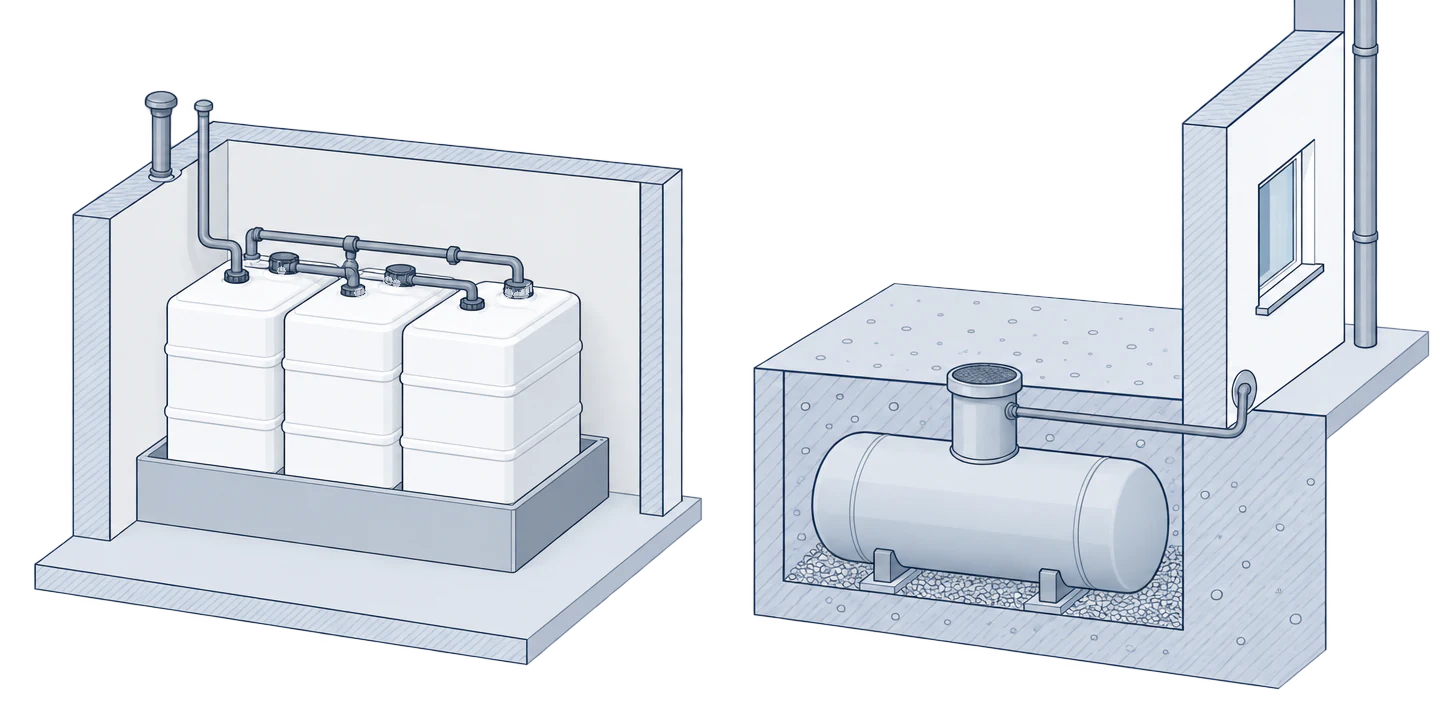
For the Boiler Upgrade Scheme, Ofgem's guidance says an oil boiler must be fully replaced, not kept alongside the heat pump, but it doesn't mention the tank: agree with your installer what happens to it. Government guidance for England says the property owner is usually legally responsible for the oil tank.
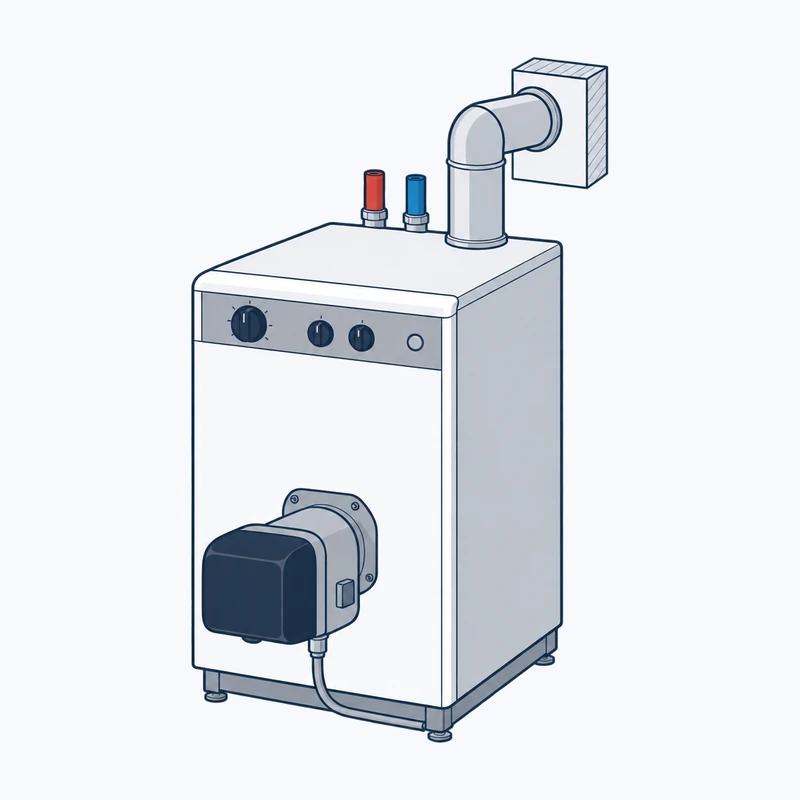
Taking the tank out of use has three parts:
- The oil. Plan the last delivery so the tank is nearly empty when the heat pump is commissioned; oil and sludge left in it count as waste.
- The tank. For a buried tank, the Environment Agency's guidance for England says to remove tanks you won't use again, after taking out the remaining oil and explosive vapours. A tank may stay in the ground only if the Environment Agency is satisfied there is no pollution risk; it is then filled with an inert material such as foamed concrete, and its capacity, contents, method and date recorded.
- The waste. In England and Wales, household waste may be handed only to an authorised person, such as a registered waste carrier. If anyone other than your installer takes the tank or oil, check their registration.
There is no official figure for removing a tank. Wales, Scotland and Northern Ireland have their own rules.
From oil to heat pump in eight steps
 Records. Several years of oil invoices, the tank's size and position, and any EPC.
 Survey and quotes. MCS-certified installers survey every room and quote; for the Boiler Upgrade Scheme they must also belong to an approved consumer code such as the Renewable Energy Consumer Code (RECC) or the Home Insulation and Energy Systems Contractors Scheme (HIES).
 The quote. The total before the grant, the grant and what you pay, with boiler removal and tank disposal as separate lines.
 Grant application. In England and Wales your installer applies to Ofgem with evidence of your oil or LPG heating; in Scotland you apply to Home Energy Scotland.
 Voucher or offer. Wait for the voucher (England and Wales) or the written offer (Scotland) before work starts.
 Electricity and oil. The installer notifies your electricity network operator; you order the last oil delivery.
 Installation. Boiler and flue out, tank emptied and taken away (a buried tank filled only where it may stay), heat pump, cylinder and controls in.
 Handover. Commissioning records and certificates; in England and Wales the installer redeems the voucher and you pay the balance.
The days on site are in heat pump installation.
Before you sign
- Tank details. Capacity, above or below ground, and any drain, watercourse or well nearby.
- Off-gas evidence. No gas meter point, plus recent oil or LPG bills or photos of the boiler.
- Quote lines. Boiler and flue removal, tank emptying and removal, waste disposal and making good, each marked included or not.
- Waste carrier. Name and registration, if it isn't your installer.
- The design. Which radiators change and whether the cylinder stays, in writing.
Figures that change
| What | Value | Applies |
|---|---|---|
| Off-gas grant | £9,000 | England and Wales; oil or LPG homes off the gas grid, applications properly made 21 July 2026 to 31 March 2027, if the home qualifies |
| Standard grant | £7,500 | England and Wales, if the home qualifies |
| Air source heat pump, installed | median £12,826; 10–12 kW median £13,948 | grants paid July–September 2026; grants paid April 2025 to March 2026; England and Wales, before the grant |
| Electricity unit rate | 26.32p/kWh | price cap, GB average, direct debit, 1 October to 31 December 2026; no VAT on electricity in Great Britain until 31 March 2027 |
| Heating oil | 52.14p a litre (2025 average), 87.43p (July–September 2026), 102.31p (September 2026) | government typical retail price, deliveries up to 1,000 litres, VAT included |
| VAT on installed heat pumps | 0%, then 5% | 0% until 31 March 2027 |
How we worked this out
Our example home (detached, off the gas grid, England, 149 m², 1,480 litres of oil a year, 85% boiler efficiency, SCOP 2.5 / 2.8 / 3.1, all our assumptions) uses the median price for grants paid July–September 2026, the October–December 2026 price cap and government oil prices for three periods, held flat; servicing, tank removal and finance are left out, and LPG stays a formula. More in our editorial method.
Frequently asked questions
How much does it cost to replace an oil boiler with a heat pump?
At the £12,826 median for grants paid in July to September 2026, an off-gas home in England or Wales replacing oil pays £3,826 if it qualifies for the off-gas grant. Add anything the quote leaves out, such as removing the tank. In Scotland your Home Energy Scotland offer sets the net price.
Is a heat pump cheaper to run than oil?
It depends mostly on the oil price and on how efficient your old boiler is. In our example home a heat pump at SCOP 2.8 costs £1,214 a year at the price cap (GB average) for 1 October to 31 December 2026, which beats oil above about 82p a litre: £79 a year less at the July to September 2026 price of 87.43p (£66 more at SCOP 2.5); at the 2025 average of 52.14p, oil cost £772 and was cheaper.
Who removes the oil tank, and does the grant pay for it?
Ask your installer whether they remove it with the old boiler or bring in a specialist, and have it priced as a separate line. The Boiler Upgrade Scheme grant is a fixed amount taken off your installer's quote, not a share of particular costs, so the tank's cost is part of what you compare between quotes.
Can I get the off-gas grant for an LPG boiler?
Yes, on the same terms as oil: in England and Wales an off-gas-grid home replacing LPG may qualify for the off-gas grant towards an air source or ground source heat pump, for applications properly made by 31 March 2027. A capped or clamped gas meter counts as mains gas, and any record of a gas meter point at the property also rules it out.
Can I keep my oil boiler as a backup?
Not if you want the Boiler Upgrade Scheme grant: in England and Wales the oil heating has to be fully replaced, and a heat pump working with a boiler as one hybrid system gets no grant. In Scotland, Home Energy Scotland funds only heat pumps that provide all of your heating and hot water.
How long does it take to replace an oil boiler with a heat pump?
There is no official figure for the days on site, so ask each installer for a programme with the quote, showing when the oil boiler and tank come out and when the heat pump is commissioned. Plan your last oil delivery around that date; the eight steps above show the order.
Read next
Reading time: 16 min
Heat pump grants
The Boiler Upgrade Scheme in full: amounts in England and Wales, the £9,000 for oil or LPG homes to 31 March 2027, who qualifies, the six steps from quote to voucher, Scotland and Northern Ireland, loans and 0% VAT to 31 March 2027.
Read moreHeat pump grants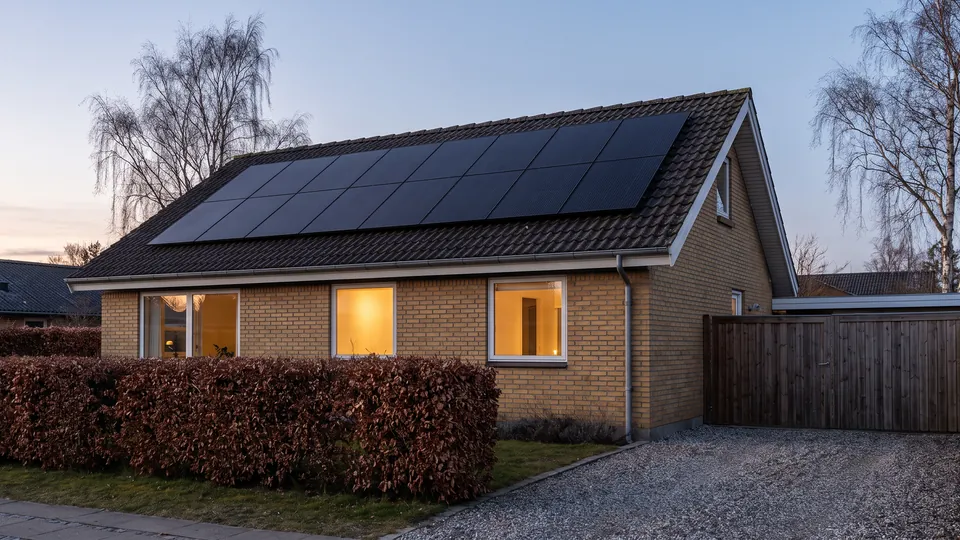
Reading time: 13 min
Heat pump grants in Scotland
The Home Energy Scotland Grant and Loan for heat pumps: the grant, the £1,500 rural and island uplift, the interest-free loan and its terms, who can apply, the six steps from advice to payment, a dated example and how it differs from the Boiler Upgrade Scheme.
Read moreHeat pump grants in Scotland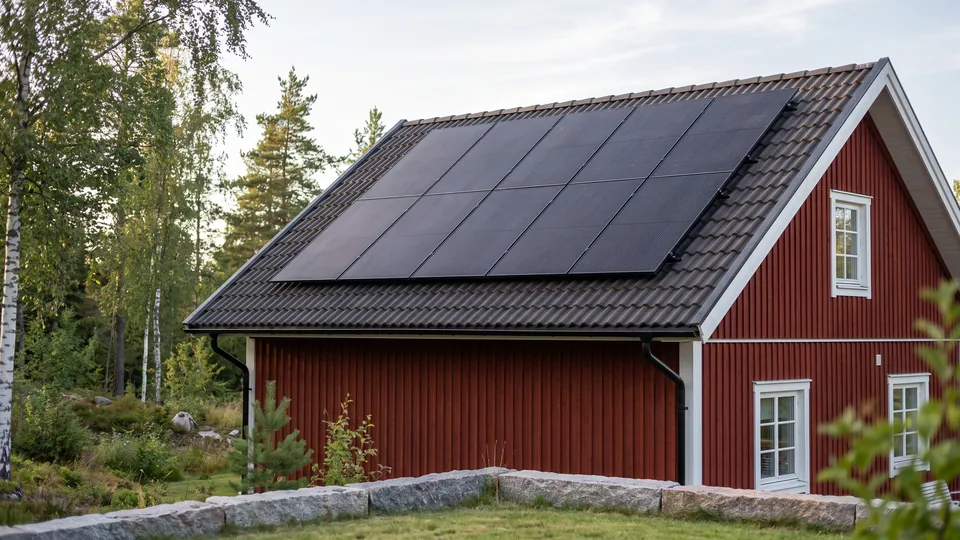
Reading time: 16 min
Heat pump cost
Installed heat pump prices from the government's Boiler Upgrade Scheme statistics: the median and its range, prices by size and type, extras in older and combi homes, the grant by nation, 0% VAT to 31 March 2027 and a worked example.
Read moreHeat pump cost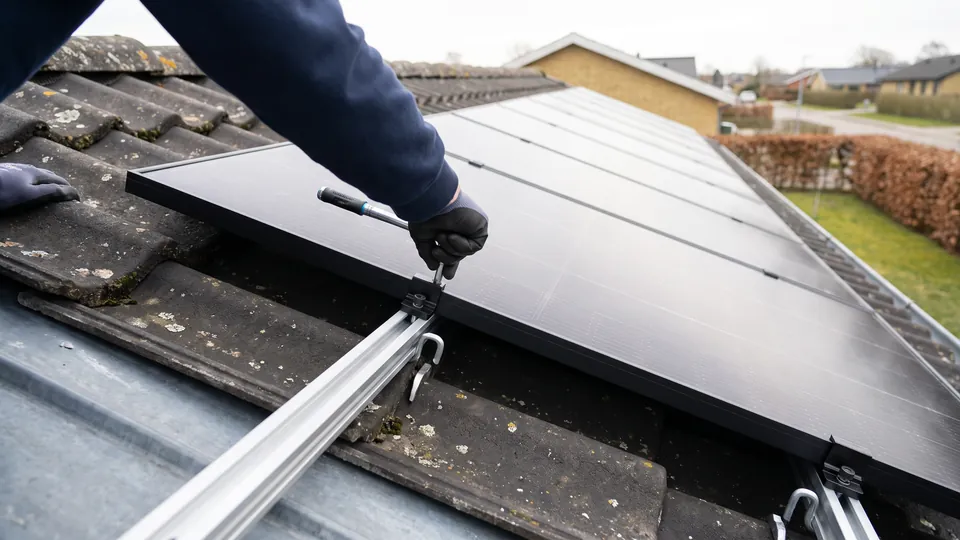
Reading time: 14 min
Heat pump running costs
Heat pump running costs in our example 1970s semi: 2,884 kWh and £759 a year at SCOP 2.8, £850 at 2.5 and £686 at 3.1 (Ofgem price cap, 1 October to 31 December 2026), against £865 for gas including a £108 standing charge that ends only if the gas supply is disconnected, as we assume.
Read moreHeat pump running costs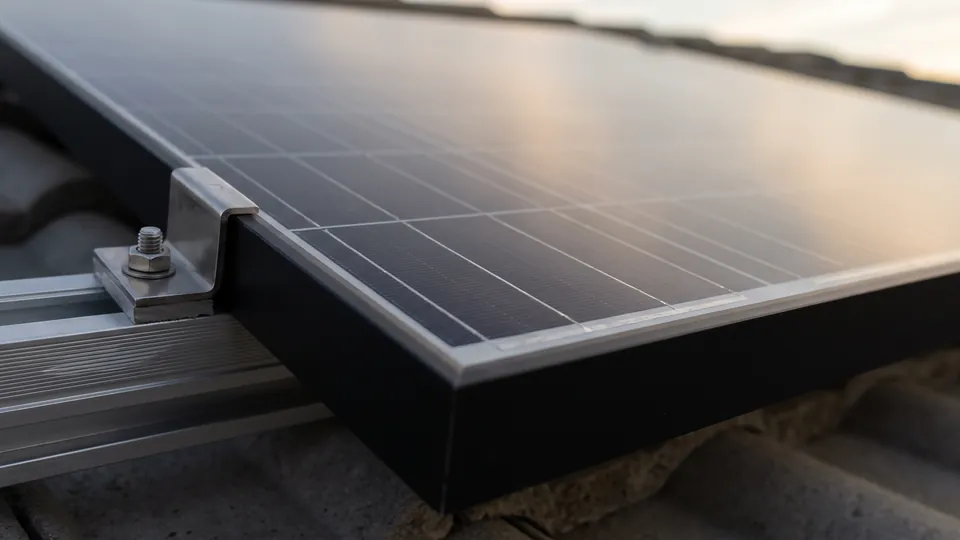
Reading time: 15 min
Is my home suitable for a heat pump?
How to tell whether your home suits a heat pump: gas use per m², a cold-day radiator test and the MCS room-by-room survey, older and solid-walled homes, space and planning, insulation and grants by nation.
Read moreIs my home suitable for a heat pump?
Reading time: 15 min
Heat pump installation
The switch from a gas boiler to an air source heat pump in order: heat-loss survey, design in writing, Boiler Upgrade Scheme voucher or Home Energy Scotland offer, hot-water cylinder, outdoor unit placement with a worked example, electrics, building-control sign-off, commissioning and handover.
Read moreHeat pump installation