What is a heat pump and how does it work?
How does a heat pump work, and what happens on a frosty morning? The refrigerant cycle step by step, what COP and SCOP mean, why temperatures matter, and how defrosting works in a UK winter.
A heat pump works like a fridge in reverse: a refrigerant picks up heat from the outside air, an electric compressor raises its temperature, and the heat passes into the water in your radiators and hot-water cylinder. Most of that heat was already in the air, so a heat pump gives out more heat than the electricity it uses. In the government-funded Electrification of Heat trial, the median across 428 air source heat pumps in British homes was 2.78 units of heat per unit of electricity over a year. It keeps working in a UK winter, though colder air and hotter radiators cost some efficiency.
At a glance
- Principle. A heat pump moves heat rather than burning fuel. In our example 1970s semi, at a SCOP of 2.8 measured over a year in real homes (heat out divided by electricity in), about 64% of the heat comes from the outside air.
- Cycle. Evaporate, compress, condense, expand: a refrigerant such as R290 (propane) or R32 goes round these four steps in a sealed circuit.
- Temperatures. The smaller the gap between the outside air and the water in your radiators, the more heat each unit of electricity buys: Mitsubishi Electric's 8 kW Ecodan R290 has an MCS SCOP of 4.35 at 35 °C flow and 3.45 at 55 °C.
- Winter. In the colder of its two columns, the MCS design standard's cold-day temperatures run from −1.5 °C in Plymouth to −5.9 °C in Glasgow. In the field trial the median COP fell from 3.37 at 10 °C outside to 2.30 at −5 °C.
- Defrost. In cold, damp weather ice forms on the outdoor unit, and the heat pump melts it with hot refrigerant, often by briefly running its cycle backwards. A cloud of vapour is normal.
What is a heat pump? It moves heat instead of making it
A fridge takes heat out of its cold compartment and releases it at the back. A heat pump uses the same kind of refrigerant circuit, but the useful side is the warm one: it takes heat from outside and releases it into the water of your central heating.
Heat can come from the air or the ground. The large majority of heat pumps fitted under the Boiler Upgrade Scheme in England and Wales are air source, and they are what this page describes; the types, and whether one suits your home, are covered in our guide to air source heat pumps.
The electricity drives the compressor, fans and pumps; most of the heat comes from outside, even from air at freezing point. So a heat pump can deliver two to three times as much heat as the electricity it uses, whereas an electric heater gives one unit of heat per unit of electricity. One rule governs every heat pump: the smaller the temperature gap between the heat source and the water it heats, the less electricity each unit of heat costs.
How an air source heat pump works: the refrigerant cycle in four steps
At the heart of every heat pump is a sealed circuit of refrigerant, which evaporates and condenses again and again without being used up.
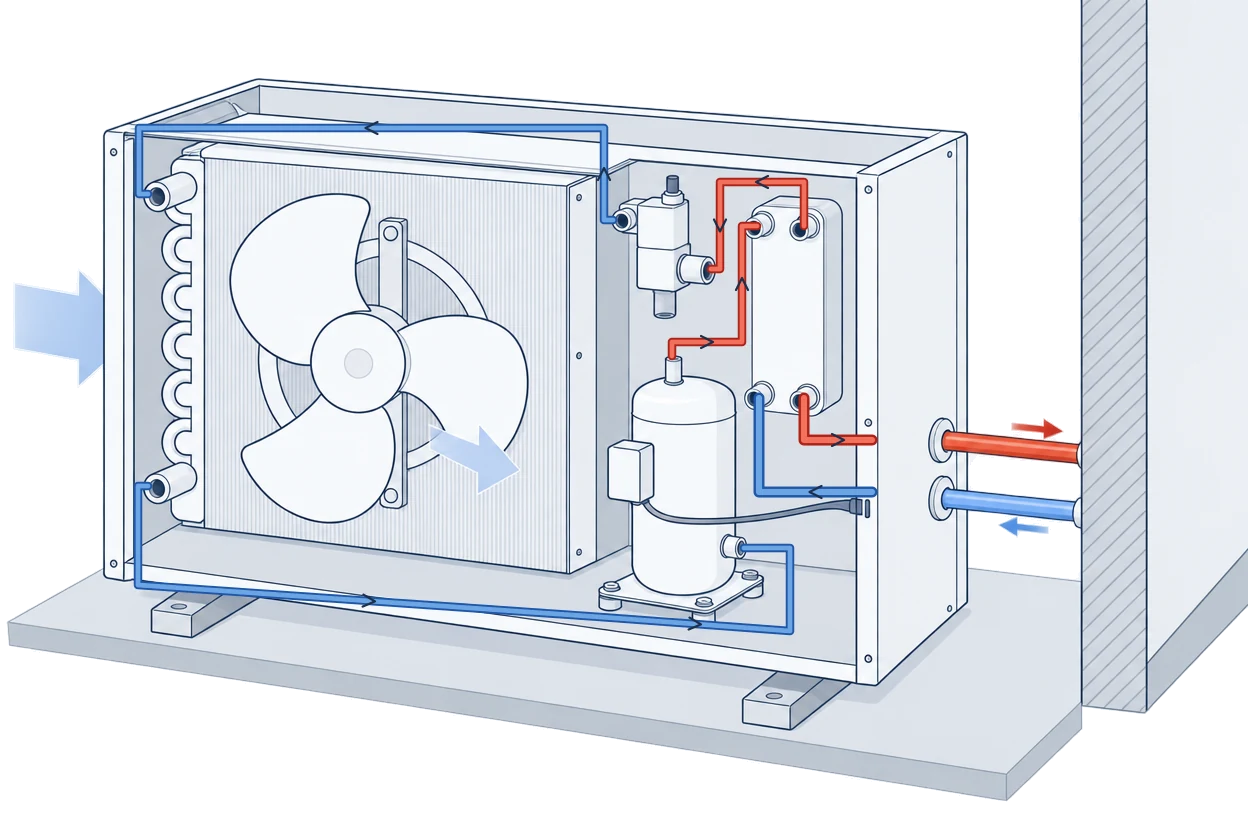
- Evaporate. A fan pulls outside air across the evaporator, a coil of thin metal fins. The refrigerant inside is colder than the air, so heat flows into it, even on a frosty day. At this low pressure it boils at a very low temperature and turns into vapour.
- Compress. An electrically driven compressor squeezes the vapour, and its pressure and temperature rise sharply. This step uses most of the electricity.
- Condense. The hot vapour hands its heat to the water in your heating system in a second heat exchanger, cools and turns back into a liquid.
- Expand. An expansion valve lets the pressure drop, and the temperature falls with it until the refrigerant is colder than the outside air again and the cycle starts again.
| Part | Refrigerant | Energy | What you notice |
|---|---|---|---|
| Evaporator | boils into vapour | takes heat from the outside air | the fan runs; frost on the fins in winter |
| Compressor | compressed and heated | uses electricity | the heat pump's electricity use |
| Condenser | turns back to liquid | gives heat to the central heating water | warm radiators or underfloor heating |
| Expansion valve | pressure drops | temperature drops | nothing; it works inside the unit |
The cycle can also run backwards. A reversing valve swaps the roles of the two heat exchangers, so the unit takes heat out of the water and releases it outdoors. Our examples come from Mitsubishi Electric's UK documents for its Ecodan R290, whose service manual shows the same valve switching between heating, cooling and defrosting.
Every one of the 428 air source heat pumps in the Electrification of Heat trial used one of three refrigerants: R290 (propane), R32 or the older R410A. R290 is highly flammable, so makers set a protective zone around the outdoor unit: for the Ecodan R290, the manual keeps it free of ignition sources, drains and openings such as windows.
In a monobloc unit the whole refrigerant circuit is sealed inside the outdoor unit, and only water pipes and electrical cables run between it and the house. In a split system an outdoor and an indoor unit are joined by refrigerant pipes made up on site, and installing a system containing F gas such as R32 needs an engineer with an F-gas qualification. Our air source heat pump guide compares the two.
Where the heat comes from: our example home
Our example home is a 1970s semi-detached house in England with radiators and a gas combi boiler: 97 m² (the average floor area of a semi in the English Housing Survey), using 9,500 kWh of gas a year (Ofgem's typical medium use). The house and the 85% boiler efficiency are our assumptions, not a measured building.
- Heat the house needs: 9,500 kWh of gas × 85% = 8,075 kWh of heat a year, for heating and hot water.
- Electricity for the heat pump: 8,075 kWh ÷ SCOP 2.8 = 2,884 kWh a year.
- Heat from the outside air: 8,075 kWh − 2,884 kWh = 5,191 kWh, about 64% of the heat.
We use a SCOP of 2.8 because it is close to the trial median of 2.78, a figure measured over a year in real homes rather than a datasheet rating. The split moves with efficiency:
| SCOP | Electricity | Heat from the air | Share from the air |
|---|---|---|---|
| 2.5 | 8,075 ÷ 2.5 = 3,230 kWh | 4,845 kWh | 60% |
| 2.8 | 8,075 ÷ 2.8 = 2,884 kWh | 5,191 kWh | 64% |
| 3.1 | 8,075 ÷ 3.1 = 2,605 kWh | 5,470 kWh | 68% |
Where 8,075 kWh of heat a year comes from
The heat pump takes electricity from the grid and heat from the outside air and gives both to the home as heat.
Per 10 kWh of heat: 4 kWh electricity + 6 kWh from the air
Heat and electricity, month by month
kWh of heat a month; the line is the electricity at SCOP 2.8
- Heat
- Electricity
- Highest
- Lowest
What the year takes
- Space heating
- 6,460 kWh
- Hot water
- 1,615 kWhabout 20%, our assumption
- Share from the air
- 64%5,191 kWh of 8,075 kWh
How much electricity the heat pump in the example house uses, how much heat it takes from the outside air and how much heat comes out for heating and hot water.
A year: 2,884 kWh of electricity and 5,191 kWh of heat from the air give 8,075 kWh of heat, 6,460 kWh for heating and 1,615 kWh for hot water; 2.8 kWh of heat per kWh of electricity.
You pay only for the electricity; what it costs at Ofgem price-cap rates is worked out in heat pump running costs.
COP and SCOP: how efficiency is quoted
COP, the coefficient of performance, is the heat out divided by the electricity in at one test point; SCOP is the same ratio over a standard heating season, and heat pump efficiency explains how to read both on a datasheet and what UK homes measured.
Under the MCS design standard MIS 3005-D (Issue 3.0), an installer certified to it must give you in writing, before work starts, the design flow temperature and the SCOP at that temperature. Expect your own year's figure to come out lower: in the Electrification of Heat trial, 91.9% of the homes compared measured below their design SCOP, and the median was 17.9% lower.
Why cold air and hot radiators cost efficiency
The compressor lifts heat from the temperature of the outside air to the temperature of the water in your heating system. The bigger the lift, the more electricity each unit of heat takes. The 8 kW Ecodan R290 shows it: its MCS SCOP is 4.35 when it supplies 35 °C water and 3.45 at 55 °C, about a fifth less heat per unit of electricity. The trial's measured figures by flow temperature are on heat pump efficiency.
You can't choose the weather, but you can influence the flow temperature. In England, Approved Document L says a newly installed or fully replaced wet heating system should be designed to work at 55 °C or lower. Weather compensation does the rest: the controller lowers the flow temperature as the outside air gets milder. Whether your radiators keep the house warm at a low flow temperature is covered in our guide to heat pump radiators.
Heat pumps in winter: do they work in very cold weather?
Yes, as long as the outside temperature stays inside the operating range on the datasheet. The Ecodan R290 8 kW lists −25 °C to +46 °C and gives 8.2 kW of heat at −7 °C outside and 35 °C water.
The system is designed for a cold day where you live: the MCS design standard's Table 2, in its colder 99.6% column, runs from −1.5 °C in Plymouth to −5.9 °C in Glasgow, and the installer sizes the heat pump to cover your home's heat loss at the value for your location, as heat pump sizing shows.
The Electrification of Heat trial measured what a cold snap does to efficiency:
Median COP of air source heat pumps in the trial
| Outside temperature | Median COP |
|---|---|
| 10 °C | 3.37 |
| −3 °C | 2.37 |
| −5 °C | 2.30 |
Many systems also have an electric backup heater, which MIS 3005-D says must be designed not to switch on unless it is colder outside than the design temperature. If yours runs often in ordinary winter weather, ask your installer to check the settings.
Heat pump defrost: why it steams in winter
The evaporator is colder than the air around it, so in cold, damp weather moisture freezes on its fins. Frost blocks the airflow, so the heat pump clears it from time to time:
- Frost is detected. The controller reads temperature sensors on the coil and starts a defrost when needed. In England, Approved Document L asks for a defrost control on air-to-water heat pumps.
- Hot refrigerant melts the ice. In units with a reversing valve, such as the Ecodan R290, the cycle runs backwards and sends hot refrigerant to the outdoor coil. The heat for this comes from the water in your heating system.
- The water drains away. Melt water drips from the unit, so the installer should lead it safely to a drain or soakaway; in England, Approved Document L asks installers to plan for condensation from a defrost.
- Heating resumes. The unit goes back to heating until frost builds up again.
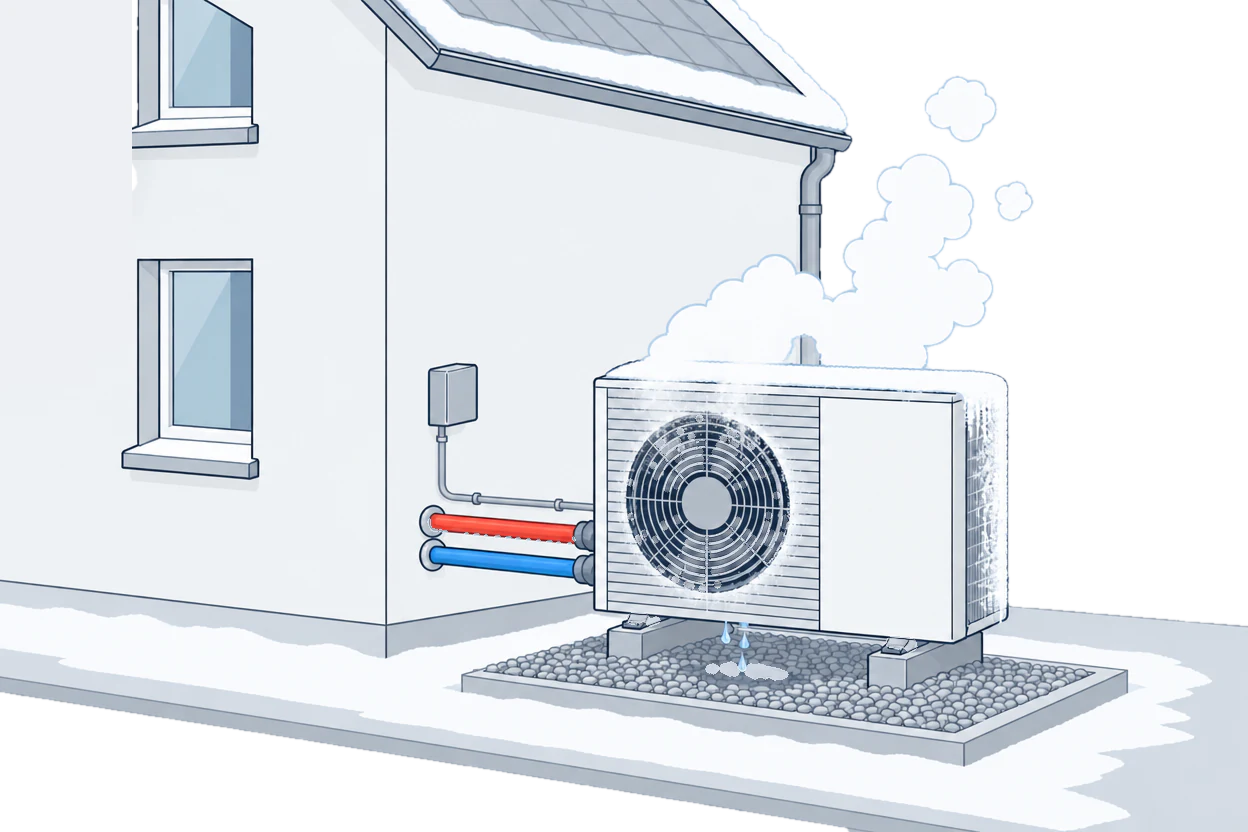
The Ecodan manual explains the vapour that worries new owners: in defrost mode, water on the outdoor heat exchanger evaporates. It is not a fault.
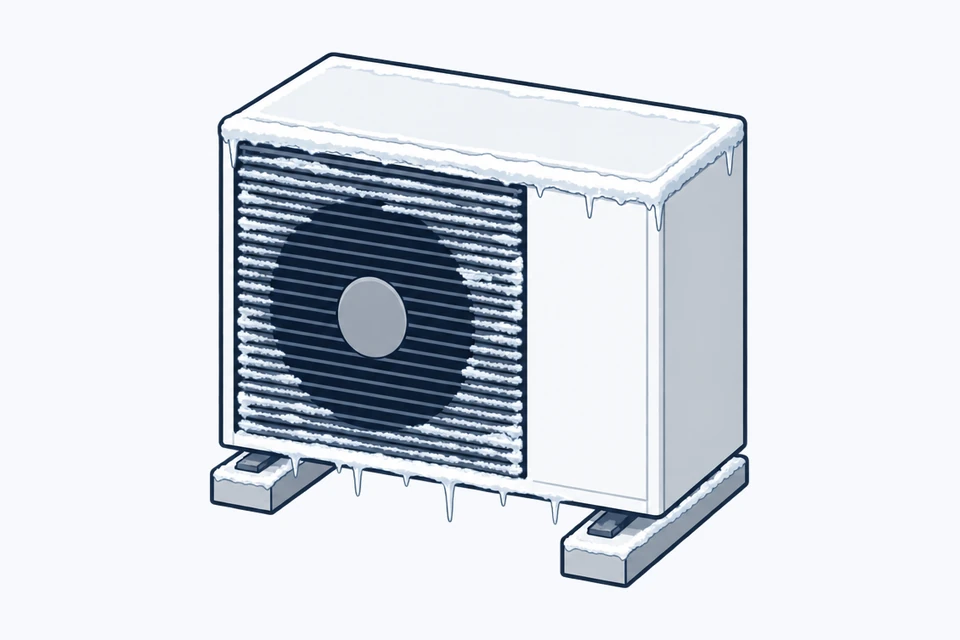
Defrosting needs enough water flowing: outside the permitted water flow rate and return water temperature, the Ecodan manual warns, the outdoor unit may not clear fully and the indoor heat exchanger may freeze. The maker sets the minimum water volume; the MCS design standard doesn't require a buffer tank, but says the system should hold your rooms at their design temperatures across repeated defrosts.
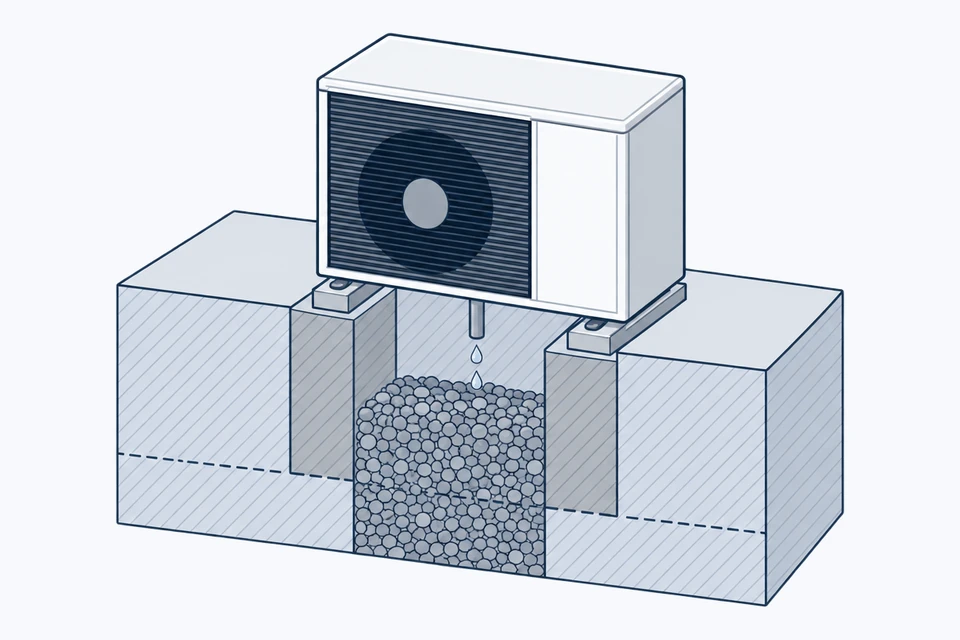
Snow is the other hazard: the manual tells installers to avoid spots where snow can cover the unit and, where heavy snow is expected, to raise it or fit a hood over the air intake.
Checklist: keeping a heat pump running in winter
Things you can do yourself
- Leave it switched on in frosty weather. The Ecodan cylinder manual says its freeze-stat function, which stops the water pipes freezing, does not work while the system is turned off.
- Keep the grilles clear. Brush snow and leaves away from the air intake and outlet.
- Vapour is normal; a standstill isn't. If the unit stops altogether, check the power supply first, then call your installer.
- Cold room? Don't just turn the flow up. A higher flow temperature makes the whole system less efficient. Ask your installer to check the radiator balance and the weather compensation settings.
- Read the figures after a year. If your system meters heat and electricity, divide the heat by the electricity over a full year and compare the result with the SCOP in your installer's design; a result far below it is worth raising with your installer, and [heat pump efficiency](/heat-pump-efficiency) shows how to read it.
Work on the refrigerant circuit and the electrics is a job for a qualified engineer.
Inside the house: radiators, hot water and controls
Indoors, the heat reaches your radiators or underfloor heating through the water in your heating system, as it did with your boiler. With a monobloc unit the water is heated outdoors; with a split system the indoor unit does that job.
A heat pump does not heat water on demand the way a combi boiler does. It heats a hot-water cylinder, so a home with a combi needs room for one; sizes, space and legionella are covered in our guide to heat pump hot water cylinders.
How we worked this out
Our example home (1970s semi, 97 m², 9,500 kWh of gas, 85% boiler efficiency as our assumption) uses SCOPs of 2.5, 2.8 and 3.1 around the Electrification of Heat median measured in real homes; product figures come from Mitsubishi Electric's UK Ecodan R290 documents, used as an example, not a recommendation. More in our editorial method.
Frequently asked questions
What is a heat pump, in simple terms?
A heat pump is an electric heating system that collects heat from outside your home, usually from the air, and moves it indoors into your radiators and hot-water cylinder. It works like a fridge running the other way round. Because it moves heat instead of making it, it gives out more heat than the electricity it uses.
How can a heat pump get heat from cold air?
Heat flows from warmer to colder, and the refrigerant in the outdoor coil is kept colder than the air, even on a frosty day, because at low pressure it boils at a very low temperature. The compressor then lifts that heat to radiator temperature, which is where the electricity goes. The smaller that lift, the less electricity each unit of heat takes.
Do heat pumps work in very cold weather?
Yes, within the operating range on the datasheet; for the Mitsubishi Electric Ecodan R290 it goes down to −25 °C. Efficiency falls as it gets colder: in the government's field trial the median COP was 3.37 at 10 °C and 2.30 at −5 °C.
Why is my heat pump steaming?
It is water vapour from a defrost cycle and needs no action, as long as the unit goes back to heating afterwards. If it doesn't, check the power supply, then call your installer.
Is a heat pump electric or gas?
A heat pump runs on electricity and burns no gas or oil in your home, so on its own it is fully electric. A hybrid system pairs a heat pump with a boiler, usually gas, under one controller.
Can a heat pump cool a house in summer?
Some can. Some air-to-water units, such as the Ecodan R290, have a cooling mode that runs the cycle backwards, and in England Approved Document L says such reversible systems should be optimised for heating. Whether your radiators or underfloor heating suit cooling is a question for your installer.
Read next
Reading time: 14 min
Air source heat pumps
The UK guide to air source heat pumps: how they work, monobloc or split, the types compared, installed prices and support by nation, running costs in an example home, suitability, planning and the pros and cons.
Read moreAir source heat pumps
Reading time: 14 min
Heat pump running costs
Heat pump running costs in our example 1970s semi: 2,884 kWh and £759 a year at SCOP 2.8, £850 at 2.5 and £686 at 3.1 (Ofgem price cap, 1 October to 31 December 2026), against £865 for gas including a £108 standing charge that ends only if the gas supply is disconnected, as we assume.
Read moreHeat pump running costs
Reading time: 14 min
Heat pump efficiency
COP, SCOP and SPF explained with a UK datasheet, the Electrification of Heat field results (median 2.78 across 428 homes), the Boiler Upgrade Scheme's SCOP 2.8 minimum (England and Wales) and a meter-reading example.
Read moreHeat pump efficiency
Reading time: 15 min
Heat pump radiators
Radiator output at heat-pump temperatures with Stelrad's ΔT factors, MCS room-by-room sizing, two rooms of our example semi worked through, flow temperature and England's 55 °C design rule, weather compensation, balancing and a checklist.
Read moreHeat pump radiators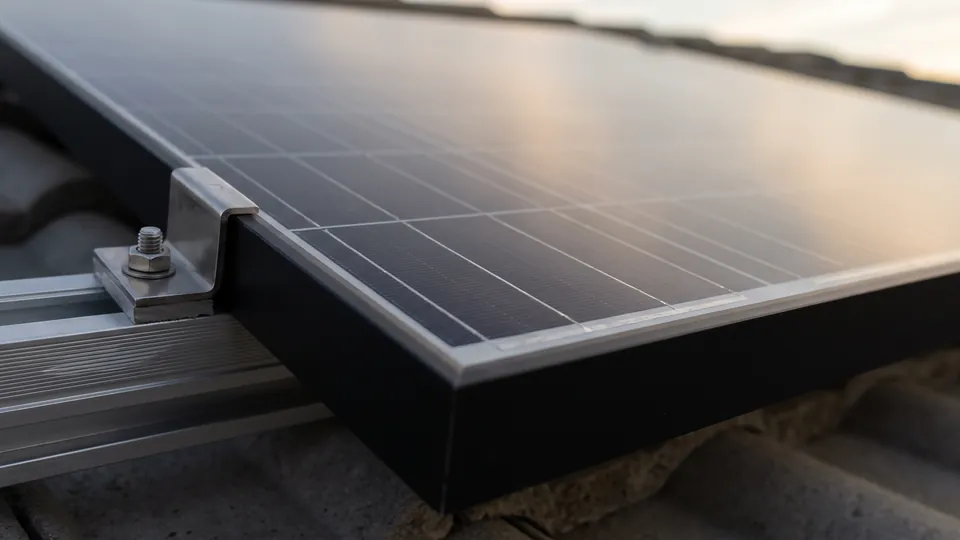
Reading time: 15 min
Heat pump sizing
Heat pump sizing explained: heat loss vs heat demand, MCS's room-by-room method (MIS 3005-D), design temperatures from Plymouth to Glasgow, a bill-based check on our example semi, backup heaters, hybrids and a checklist for the heat loss report.
Read moreHeat pump sizing
Reading time: 14 min
Heat pump hot water cylinder
Hot water cylinders for heat pumps: MCS sizing (45 litres a day per person), cylinder sizes by bedrooms and heat pump size, space and weight, unvented G3 rules by nation, legionella and the immersion heater, a worked example and standalone hot water heat pumps.
Read moreHeat pump hot water cylinder