Heat pumps and solar panels: how much can solar really cover?
Heat pump and solar panels together: solar can run part of a heat pump, but in the UK most of its winter electricity usually still comes from the grid. Here is why, what each solar kWh is worth to the heat pump, how to run it on spare solar, and when exporting or a time-of-use tariff does more.
Solar panels can run part of a heat pump, but in the UK most of a heat pump's winter electricity usually still comes from the grid. In 2025, 83% of the year's heating degree days (the government's measure of how much heating the weather calls for) fell in January to March and October to December. Those months produced only 24% of the year's UK solar generation, so the overlap is mainly hot water, which a heat pump has to heat all year. Each solar kWh the heat pump uses is worth your unit rate, 26.32p at the Ofgem price cap (GB average, direct debit, 1 October to 31 December 2026), minus what an export tariff would have paid for it.
At a glance
- Seasons. In 2025, 83% of heating degree days fell in the first and last quarters of the year, when UK solar generation produced 24% of its annual output.
- Overlap. Hot water is needed every day, so in summer it is most of what the heat pump does, and daytime solar can heat the cylinder.
- Value. A solar kWh used by the heat pump saves the unit rate it replaces (26.32p at the Ofgem price cap, GB average, direct debit, 1 October to 31 December 2026), less the export payment you give up.
- Controls. To use more surplus, the heat pump needs a signal from an energy manager or inverter and a controller that can act on it; not every model can.
- Tariffs. A heat-pump time-of-use tariff prices some hours lower all year, winter included; it cuts the cost only if the heat pump shifts its work into them.
How much of a heat pump's electricity can solar panels cover?
Three different percentages get quoted when heat pumps and solar panels are sold together:
- Self-consumption: how much of the panels' output is used in your home rather than exported.
- Solar share of the household: how much of your home's electricity, heat pump included, comes from the panels.
- Solar share of the heat pump: how much of the heat pump's own electricity comes from the panels.
A heat pump adds a big new load, so self-consumption goes up; that doesn't mean the heat pump runs mostly on sunshine. Ask which of the three numbers a quote is showing you.
Timing decides the third number. A heat pump works hardest when it is coldest: at night, in the early morning and through the darker months. Panels produce around the middle of the day, mostly from spring to autumn. Without a link between the two, the heat pump uses only the solar that arrives while it happens to be running, and the rest is exported. With a control that switches it on, or turns up the cylinder temperature, when there is spare output, more of its work moves into sunny hours.
Summer and winter: why solar and heating don't line up
Heating degree days add up, day by day, how far the outdoor temperature falls below 15.5 °C; the more degree days, the more heat a home needs. The government publishes them in its Energy Trends statistics, as it does UK solar generation, and the two run in opposite directions:
Share of the year, 2025
| Quarter | Heating degree days | UK solar generation |
|---|---|---|
| Jan–Mar | 49.3% | 13.2% |
| Apr–Jun | 13.9% | 41.8% |
| Jul–Sep | 3.2% | 34.5% |
| Oct–Dec | 33.6% | 10.5% |
In 2025 the first and last quarters held 83% of the heating degree days but only 24% of solar generation. April to September was the reverse: 76% of the solar output and 17% of the degree days, with almost none in July. The 1991–2020 average shows the same pattern: October to March holds about 77% of the year's degree days.
So from autumn to spring the heat pump heats the house, largely when the panels give little; from late spring to early autumn heating mostly stops, and its main job is hot water. That is the overlap. MCS plans a heat pump's hot water at 45 litres a day for each person, counting one more person than you have bedrooms (or your actual occupants, if more), so a three-bedroom home with up to four occupants is planned for 180 litres a day all year. In summer, daytime solar can cover that daily cylinder reheat if it happens while the panels are producing. Homes switching from a combi boiler need a hot-water cylinder anyway, and that cylinder is the store spare solar can fill.
Worked example: what a solar kWh is worth to your heat pump
Our example home is a 1970s semi in England with 97 m² of floor space, radiators and a gas combi boiler. It uses 9,500 kWh of gas a year, Ofgem's typical medium use, and we assume the boiler turns 85% of it into heat. It's an illustration, not a forecast:
- Heat needed: 9,500 kWh × 85% = 8,075 kWh a year.
- Heat pump electricity: 8,075 kWh ÷ 2.8 = 2,884 kWh a year. A SCOP (seasonal coefficient of performance) of 2.8 means 2.8 kWh of heat per kWh of electricity, close to the 2.78 median measured in the government-funded Electrification of Heat trial.
- Bought from the grid: 2,884 kWh × 26.32p = £759 a year at the price cap (GB average, direct debit, 1 October to 31 December 2026, with no VAT on electricity in Great Britain until 31 March 2027). At SCOP 2.5 the same sum gives 3,230 kWh and £850; at SCOP 3.1, 2,605 kWh and £686.
Solar replaces part of that bill:
Value (£) = solar kWh the heat pump uses × (unit rate it replaces − export rate you give up)
At the cap rate, every 100 kWh of the heat pump's electricity that comes from your panels avoids £26.32 of grid electricity, before taking off what those 100 kWh would have earned as export. In our example home at SCOP 2.8, each 10% of the heat pump's electricity covered by solar is 288 kWh, which avoids about £76 a year of grid electricity at the cap rate, before the export payment it would have earned (£85 at SCOP 2.5, £69 at 3.1). Ask your installer for the solar kWh month by month, then use your own unit rate and export rate.
Three things make the real gain smaller:
- The export rate. Each kWh the heat pump uses is a kWh you no longer export.
- A cheaper tariff. On a time-of-use tariff, a solar kWh replaces the rate of that hour, which may be well below 26.32p.
- Extra heat. Running the heat pump harder than the house or cylinder needs, just to soak up surplus, costs efficiency (see the next section).
The electricity standing charge stays the same either way. The full-year arithmetic at three SCOPs is in heat pump running costs; what moves the SCOP is in heat pump efficiency.
Running the heat pump and cylinder on spare solar
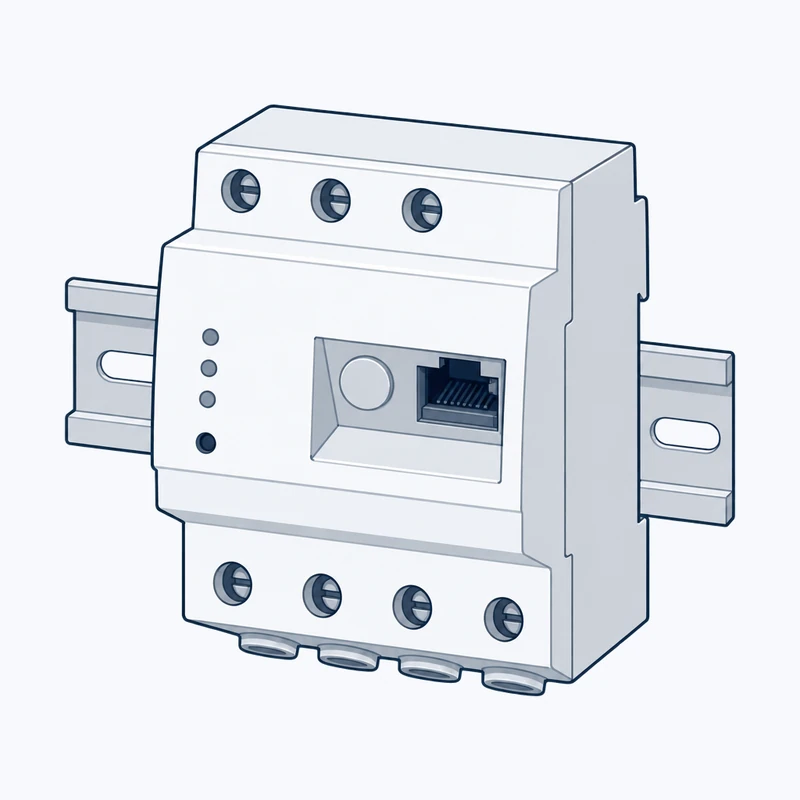
To use more solar, the heat pump has to know when there is spare output. The signal usually comes from an energy manager, a separate device or a function of the solar inverter, which watches the flow at your meter and passes on only what would otherwise be exported.
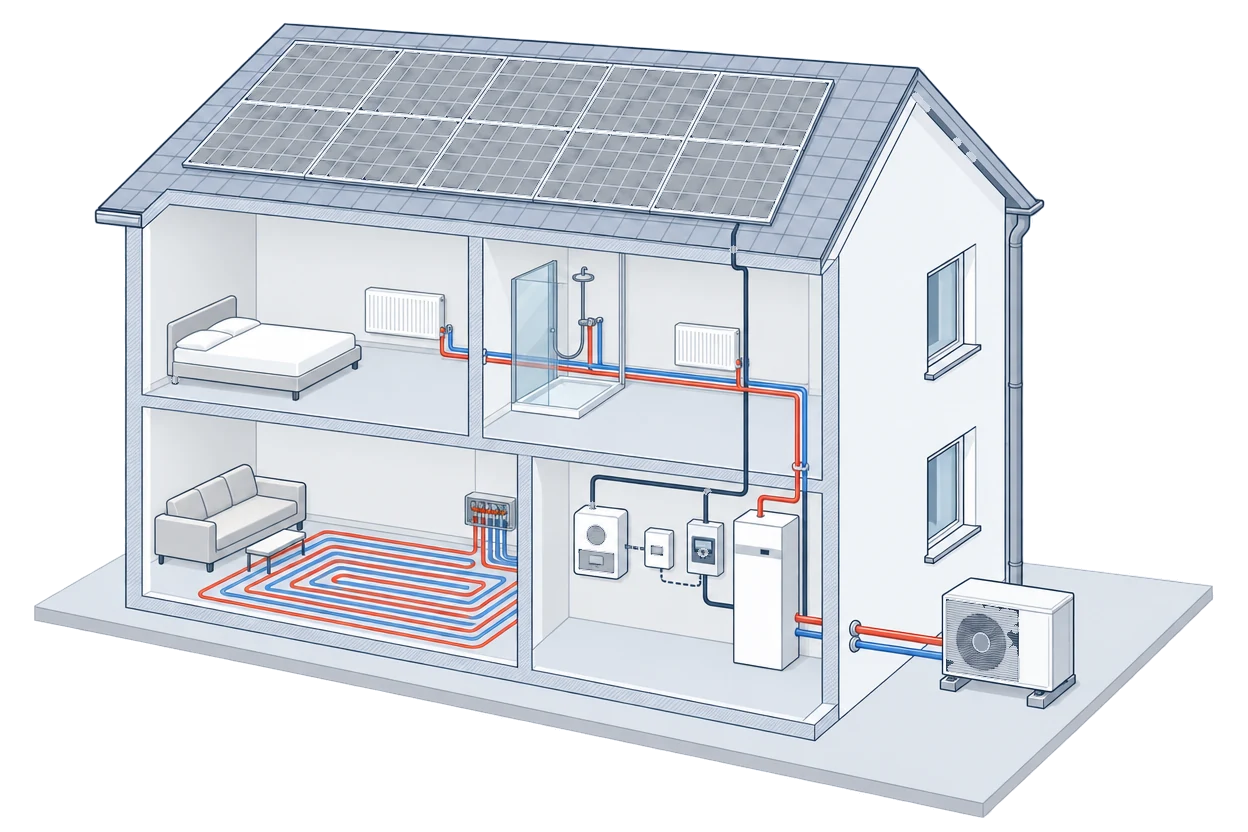
The heat pump's controller then has to act on the signal, typically by raising the cylinder's target temperature or nudging the room temperature up while the sun shines. Not every model can. Samsung lists built-in solar PV compatibility on some of its UK heat pumps but not the TDM Plus, and Smart Grid Readiness on some but not the Mono or TDM Plus; NIBE says the controller of its S2125 system can integrate with solar PV. Check the exact model, not the brand.
Storing surplus as heat costs some efficiency, because a heat pump is less efficient at higher temperatures: in the Electrification of Heat trial the median heat pump made 2.38 units of heat per unit of electricity at a 55 °C flow temperature, against 3.50 at 35 °C (more in heat pump efficiency). A modest boost, only when there really is surplus, works better than a big one.
The Legionella cycle is worth a look too. MCS requires a hot-water system to have a way of preventing bacterial growth, such as a regular heat-up of the cylinder above 60 °C, which on some systems uses an electric heater. On Mitsubishi Electric's Ecodan cylinder controller, for example, the start time can be set to any hour and is 3am by default. Ask your installer whether a midday start suits your system, so the panels cover part of it in sunnier months.
The other common route is a diverter, which sends surplus to the cylinder's immersion heater. An immersion makes 1 kWh of heat from 1 kWh of electricity; the heat pump makes about 2.8 over a season, less when it heats water. So a diverted kWh is only worth the electricity the heat pump would have needed for the same heat:
| Spare kWh goes to | It replaces | Worth per kWhAt the Ofgem price cap, GB average, direct debit, 1 October to 31 December 2026; SCOP 2.8 is our central value |
|---|---|---|
| Heat pump, running now | a grid kWh the heat pump would have bought | your unit rate: 26.32p, or less in a cheap tariff hour |
| Immersion heater via a diverter | heat the heat pump would have made from less than half a kWh | 26.32p ÷ 2.8 ≈ 9.4p; about 11p for hot water (÷ 2.38) |
| Export | nothing in the home | your export rate |
| Home battery, used later | a grid kWh bought later | the rate at that hour, less storage losses |
Diverted to the immersion, 100 kWh of surplus saves about £9.40 of heat-pump electricity at the cap rate and SCOP 2.8. Hot water needs higher flow temperatures, where the heat pump is less efficient, so a diverted kWh is worth somewhat more: about 11p at the trial's 55 °C median of 2.38 (26.32p ÷ 2.38). If your export rate is above that, exporting earns more than the immersion; using the kWh in the heat pump beats both unless your export rate is above the unit rate of that hour.
Using it yourself or exporting it: the Smart Export Guarantee
In Great Britain, the Smart Export Guarantee (SEG) pays for electricity your panels send to the grid, if the panels and their installer are MCS-certified or equivalent. The supplier paying for your export sets the rate, which must always be above zero, and need not be your electricity supplier. Exports are usually measured by a smart meter, and that supplier can tell you whether yours will do. Northern Ireland is outside the scheme.
For the heat pump the rule is simple: a kWh you use is worth the import rate it replaces, a kWh you export is worth the export rate, and the gap is what self-use gains. Export rates differ between suppliers, so put your own into the formula above.
A home battery doesn't change the seasonal picture: it moves solar by hours, not months, and in midwinter there is often too little surplus to fill it. In summer the cylinder already stores daytime solar as heat.
Time-of-use tariffs: the other way to cut what the heat pump costs
Solar does most for the heat pump in summer, when it needs least. A heat-pump time-of-use tariff works all year, including the cold months when the heat pump uses most of its electricity: it prices some hours lower, so a heat pump that shifts its work into them buys more cheaply. The types, and how to judge one against the price cap, are in our guide to heat pump tariffs.
The two can work together, with one catch. In Great Britain, several heat-pump tariffs include a cheap window in the early afternoon, for example 1pm to 4pm, which overlaps with solar hours. In summer a solar kWh used at 2pm may then be replacing a discounted grid kWh. Value solar against the heat pump's average rate across the day (each band's price, weighted by how much of its electricity falls in that band), not the headline one. These tariffs need a smart meter, usually one that sends half-hourly readings to your supplier. In practice: solar for the cylinder in summer, cheap hours through the winter.
Planning a heat pump alongside solar panels
Whether panels come first, the heat pump first or both together, the heat pump should be sized for your home's winter heat loss, which an MCS-certified installer calculates room by room, not around the panels.
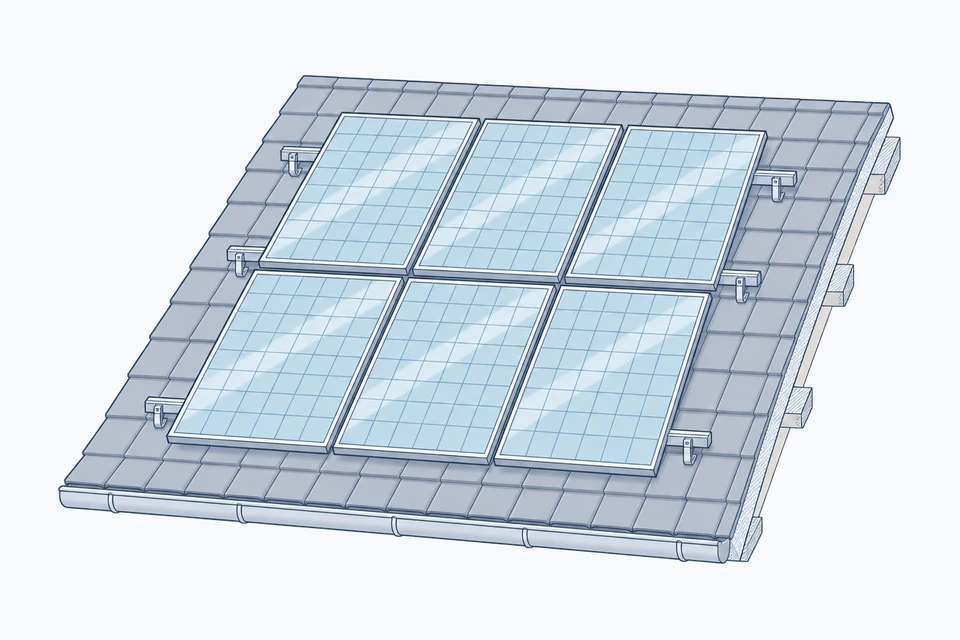
If two companies are involved, agree in writing before you sign who owns the link between the panels and the heat pump, and ask for an estimate that includes the heat pump's own electricity month by month. How to compare heat-pump quotes line by line is in our guide to choosing an MCS heat pump installer.
Checklist: what to ask about solar and your heat pump
- Controller input. Does this exact heat-pump model accept a solar or smart-grid signal, and which device sends it?
- What it does with surplus. Which temperature goes up, the cylinder's or the rooms', by how much, and from what level of spare output?
- Immersion and diverter. Is there a diverter, and does it only take surplus the heat pump can't use?
- Legionella cycle. When does it run, and can it move to the middle of the day?
- Which percentage. Is the estimate self-consumption, the household's solar share or the heat pump's own, and is it month by month?
- Metering. Does your smart meter measure exports and send half-hourly readings?
- Tariff fit. Do the controls still work if you move to a time-of-use tariff?
- Separate lines. Are panels, battery, controls and heat pump each priced on their own, so the heat-pump quote can be compared with others, and who answers if the heat pump stops responding to the solar signal?
Figures that change
| What | Value | Applies |
|---|---|---|
| Electricity unit rate, Ofgem price cap | 26.32p/kWh | GB average, direct debit, 1 October to 31 December 2026 |
| VAT on electricity | none | Great Britain, 1 October 2026 to 31 March 2027 (Northern Ireland unchanged) |
| Smart Export Guarantee rate | set by each supplier, always above zero | Great Britain |
| Share of heating degree days, January–March and October–December | 83% | 2025, DESNZ Energy Trends table 7.1 |
| Share of UK solar generation, same quarters | 24% | 2025, DESNZ Energy Trends table 6.1 |
How we worked this out
The example uses our 1970s gas semi (9,500 kWh of gas, 85% boiler efficiency as our assumption, SCOP 2.8 with 2.5 and 3.1 for the range) and the Ofgem price-cap rate for 1 October to 31 December 2026; the seasonal shares are our arithmetic on DESNZ statistics for 2025. We assume no solar yield, export rate or equipment price. More in our editorial method.
Frequently asked questions
Can solar panels power a heat pump?
Partly. Panels can cover part of the heat pump's electricity from spring to autumn, when its main job is hot water, but in winter, when it uses most, solar output is low and much of the heating happens in the dark. Year round, most homes will still buy a large part of the heat pump's electricity from the grid.
Do I need solar panels to run a heat pump, and how many?
No. A heat pump runs on grid electricity and works without panels; solar only reduces how much of it you buy. Panels alone can't run one through a UK winter: much of the heating happens in the dark, and winter output is low. So the useful question is how much of the heat pump's electricity falls in the hours and months your panels produce; ask the installer for a month-by-month estimate that includes the heat pump.
Should spare solar go to the heat pump or an immersion heater?
To the heat pump, if it can use it: each kWh then saves a grid kWh at your unit rate, 26.32p at the price cap (GB average, direct debit, 1 October to 31 December 2026), or less in a cheap tariff hour. Through an immersion, the same kWh only saves what the heat pump would have used for that heat: about 9.4p at a SCOP of 2.8, nearer 11p for hot water, which the heat pump makes less efficiently. If your export rate is higher than that, exporting beats the immersion.
Will a home battery let solar run my heat pump in winter?
Not to any great extent. A battery moves solar by hours, not months, and in midwinter there is often too little surplus to fill it. It can help on bright spring and autumn days, while the hot-water cylinder already stores summer solar as heat.
Do I need a smart meter for a heat-pump tariff?
In practice, yes: heat-pump time-of-use tariffs need a smart meter, usually one that sends half-hourly readings to your supplier, because the price changes through the day. If you also export solar, Smart Export Guarantee payments (Great Britain only) need a meter that records exports. Ask your electricity supplier, and your export supplier if it is a different company, whether your existing meter can do both.
Read next
Reading time: 14 min
Heat pump tariffs
Heat pump tariffs in the UK: cheap-hour, time-of-use and half-hourly types, supplier examples as facts, and a weighted-rate test against the Ofgem price cap of 26.32p/kWh (1 October to 31 December 2026).
Read moreHeat pump tariffs
Reading time: 14 min
Heat pump running costs
Heat pump running costs in our example 1970s semi: 2,884 kWh and £759 a year at SCOP 2.8, £850 at 2.5 and £686 at 3.1 (Ofgem price cap, 1 October to 31 December 2026), against £865 for gas including a £108 standing charge that ends only if the gas supply is disconnected, as we assume.
Read moreHeat pump running costs
Reading time: 14 min
Heat pump efficiency
COP, SCOP and SPF explained with a UK datasheet, the Electrification of Heat field results (median 2.78 across 428 homes), the Boiler Upgrade Scheme's SCOP 2.8 minimum (England and Wales) and a meter-reading example.
Read moreHeat pump efficiency
Reading time: 14 min
Heat pump hot water cylinder
Hot water cylinders for heat pumps: MCS sizing (45 litres a day per person), cylinder sizes by bedrooms and heat pump size, space and weight, unvented G3 rules by nation, legionella and the immersion heater, a worked example and standalone hot water heat pumps.
Read moreHeat pump hot water cylinder
Reading time: 15 min
Heat pump installers
How to choose an MCS-certified heat pump installer: checking certification and consumer-code membership, what a complete quote and design must show, warning signs, deposit protection under RECC and HIES, and cancellation rights.
Read moreHeat pump installers