Heat pump running costs: what you'll pay a year
Heat pump running costs come down to three numbers: the heat your home needs, the heat pump's efficiency and your electricity rate. Here they are worked through for our example gas semi at Ofgem price-cap rates, with the gas comparison, the whole bill and what lowers it.
Heat pump running costs equal the heat your home needs, divided by the heat pump's seasonal coefficient of performance (SCOP), times your electricity unit rate. In our example 1970s gas semi in England, 8,075 kWh of heat ÷ 2.8 = 2,884 kWh of electricity, or £759 a year at the Ofgem price cap of 26.32p/kWh (GB average, direct debit, 1 October to 31 December 2026; no VAT on electricity in Great Britain until 31 March 2027). That is £850 at a SCOP of 2.5 and £686 at 3.1, against £757 of gas in the existing boiler.
At a glance
- Formula. Heat needed (kWh) ÷ SCOP × your unit rate, with the heat taken from the gas you burn now.
- Our example. 2,884 kWh and £759 a year at SCOP 2.8, £850 at 2.5 and £686 at 3.1 (price cap, GB average, 1 October to 31 December 2026).
- Against gas. The heat pump costs less than the gas you burn from a SCOP of 2.81, or from 2.46 if you end the gas supply and stop paying its standing charge (29.68p a day).
- Per month and per day. About £63 a month and 7.9 kWh a day on average at SCOP 2.8, with most of it used in the winter months.
- Prices move. Ofgem resets the cap every three months, and in Great Britain electricity carries no VAT only from 1 October 2026 to 31 March 2027.
How to work out heat pump running costs
Three numbers decide what a heat pump costs to run: the heat your home uses in a year, the heat pump's efficiency and what you pay per kWh:
Running cost (£) = heat needed (kWh) ÷ SCOP × electricity unit rate (£ per kWh)
SCOP (seasonal coefficient of performance) is the heat delivered for each unit of electricity over a whole year: at 2.8, every kWh of electricity becomes 2.8 kWh of heat. We use 2.8, close to the 2.78 median measured across 428 air source heat pumps in the government-funded Electrification of Heat trial, with 2.5 and 3.1 either side. What moves it is in heat pump efficiency.
To put in your own numbers:
- Find your gas use. Take the kWh of gas from your annual statements; an average of two or three years evens out a mild or harsh winter.
- Turn it into heat. Multiply by your boiler's efficiency. The Microgeneration Certification Scheme (MCS) performance-estimate method, MCS 031, uses 0.92 for an existing boiler fitted after 2007, 0.87 for one fitted from 1994 to 2007 and 0.82 for an older one; our example assumes 85%.
- Divide by the SCOP. Use the figure your MCS-certified installer gives you in writing before installation, and run the sum again with a lower one.
- Multiply by your unit rate. From your bill, or the price-cap rate for the period.
Our example home is a 1970s semi-detached house in England with 97 m² of floor space (the average for a semi in the English Housing Survey), radiators and a gas combi boiler. It uses 9,500 kWh of gas a year, Ofgem's typical medium use, and we assume the boiler turns 85% of it into heat. It's an illustration, not a forecast for your home:
- Heat: 9,500 kWh of gas × 85% = 8,075 kWh of heat a year.
- Electricity: 8,075 kWh ÷ 2.8 = 2,884 kWh a year.
- Cost: 2,884 kWh × 26.32p = £759 a year.
The gas figure covers hot water as well as heating, so the result does too if the heat pump takes over both. It also includes any gas cooking, which slightly overstates what the heat pump needs.
Use this table as a quick running-costs calculator for other gas use, with the same 85% and price-cap rate:
| Gas a year | Heat | kWh at 2.8Electricity the heat pump needs at SCOP 2.8 | SCOP 2.5Running cost a year at 26.32p/kWh | SCOP 2.8Running cost a year at 26.32p/kWh | SCOP 3.1Running cost a year at 26.32p/kWh |
|---|---|---|---|---|---|
| 7,000 kWh | 5,950 kWh | 2,125 kWh | £626 | £559 | £505 |
| 9,500 kWh (our example) | 8,075 kWh | 2,884 kWh | £850 | £759 | £686 |
| 12,000 kWh | 10,200 kWh | 3,643 kWh | £1,074 | £959 | £866 |
| 15,000 kWh | 12,750 kWh | 4,554 kWh | £1,342 | £1,199 | £1,083 |
| 20,000 kWh | 17,000 kWh | 6,071 kWh | £1,790 | £1,598 | £1,443 |
Heating with oil or LPG? The same formula applies once you convert the fuel to kWh; for oil, replacing an oil boiler with a heat pump does the sum.
Heat pump running costs compared with gas
At price-cap rates for 1 October to 31 December 2026 (GB average, direct debit), the gas costs 9,500 kWh × 7.97p = £757 a year, plus a standing charge of 29.68p a day, or £108 a year. Gas prices include 5% VAT; electricity carries none until 31 March 2027.
| Heating | Energy a year | Cost a year | A month |
|---|---|---|---|
| Gas boiler, with gas standing charge | 9,500 kWh of gas | £865 | £72 |
| Heat pump, SCOP 2.5 | 3,230 kWh | £850 | £71 |
| Heat pump, SCOP 2.8 | 2,884 kWh | £759 | £63 |
| Heat pump, SCOP 3.1 | 2,605 kWh | £686 | £57 |
The gas row includes the £108 standing charge, and the heat pump rows assume we disconnect the gas supply. With gas kept, add £108 a year to each heat pump row.
Heating cost a year in our example home
| Heating | Gas boiler | Heat pump |
|---|---|---|
| Gas boiler | £865 | |
| Heat pump, SCOP 2.5 | £850 | |
| Heat pump, SCOP 2.8 | £759 | |
| Heat pump, SCOP 3.1 | £686 |
The standing charges decide which way this goes:
- Electricity standing charge. 54.83p a day, or £200 a year. You pay it with or without a heat pump, so it doesn't change the comparison.
- Gas standing charge. £108 a year. It stops only if the gas supply is ended. Keep gas for a hob and you keep paying it.
On unit rates alone, with the gas standing charge paid either way, the heat pump matches gas at a SCOP of 0.85 × 26.32 ÷ 7.97 = 2.81. If the gas supply is ended, 8,075 kWh × 26.32p is £2,125, so the heat pump matches £865 of gas at a SCOP of £2,125 ÷ £865 = 2.46. Below 2.46 our example heat pump costs more to run than gas even with the gas supply ended.
The boiler's efficiency moves the bar. With an existing boiler fitted after 2007, which MCS's method rates at 92%, the break-even with gas kept rises to about 3.04 in our arithmetic (26.32 ÷ (7.97 ÷ 0.92)); our example keeps 85%. A new boiler is more efficient still, which raises the break-even further; those sums and the payback are in heat pump vs gas boiler.
The price period matters too. Without Great Britain's VAT relief on electricity (27.64p instead of 26.32p), the unit-rate break-even would be 0.85 × 27.64 ÷ 7.97 = 2.95, and it moves with every price-cap reset.
Which electricity rate beats gas at your SCOP?
Example home: 8,075 kWh of heat a year, so 2,884 kWh of electricity at a SCOP of 2.8. Its gas boiler today costs £865 a year: any rate below 30.01p/kWh beats it.
- Cheaper to run than the gas boiler4 options
- Cap, with 60% of use 10p cheaperFor illustration only, if the house and cylinder can hold the heat: 6p lower£586£279 less a year
- Cap, with 30% of use 10p cheaperFor illustration only: a weighted rate 3p lower£673£193 less a year
- Price cap, one rate all dayOfgem price cap, 1 October to 31 December 2026, Direct Debit£759£106 less a year
- A new gas boiler instead93% efficient, gas at the same rate£800£65 less a year
- The gas boiler today1 option
- Your gas boiler today9,500 kWh of gas at 7.97p/kWh, plus the standing charge of £108£865the benchmark
- Dearer to run than the gas boiler0 options
The electricity standing charge is paid either way and left out. With the gas kept for a hob, its standing charge stays too, so only the gas units count. The 30% and 60% rows illustrate the weighted-rate arithmetic; they are not a supplier’s prices.
What the heat pump in the example home costs to run a year, by electricity rate and SCOP, against the gas boiler.
Heat pump cost per month: your whole energy bill
A heat pump adds to an electricity bill you already pay. Ofgem's typical medium use is 2,500 kWh of electricity and 9,500 kWh of gas a year; at the cap for 1 October to 31 December 2026 that comes to £1,724 in our sums, in line with the £1,723 typical bill Ofgem gives.
| Bill line | BeforeGas combi boiler, Ofgem typical medium use | AfterHeat pump at SCOP 2.8, gas supply ended | Gas keptHeat pump at SCOP 2.8, gas kept for a hob |
|---|---|---|---|
| Electricity | 2,500 kWh, £658 | 5,384 kWh, £1,417 | 5,384 kWh, £1,417 |
| Electricity standing charge | £200 | £200 | £200 |
| Gas | 9,500 kWh, £757 | – | – |
| Gas standing charge | £108 | – | £108 |
| Total a year | £1,724 | £1,617 | £1,726 |
| A month | £144 | £135 | £144 |
Lines are rounded; totals use unrounded figures. With the gas supply ended, the "after" total is £1,708 a year (£142 a month) at SCOP 2.5 and £1,544 (£129) at 3.1. After the switch, electricity is the household's 2,500 kWh plus the heat pump's 2,884 kWh. Paying one standing charge instead of two is why the "after" column is £106 lower. The "gas kept" column leaves out the small amount of gas a hob burns; whether a gas supply can stay alongside a grant-funded heat pump is a question for your installer.
How much electricity does a heat pump use a day?
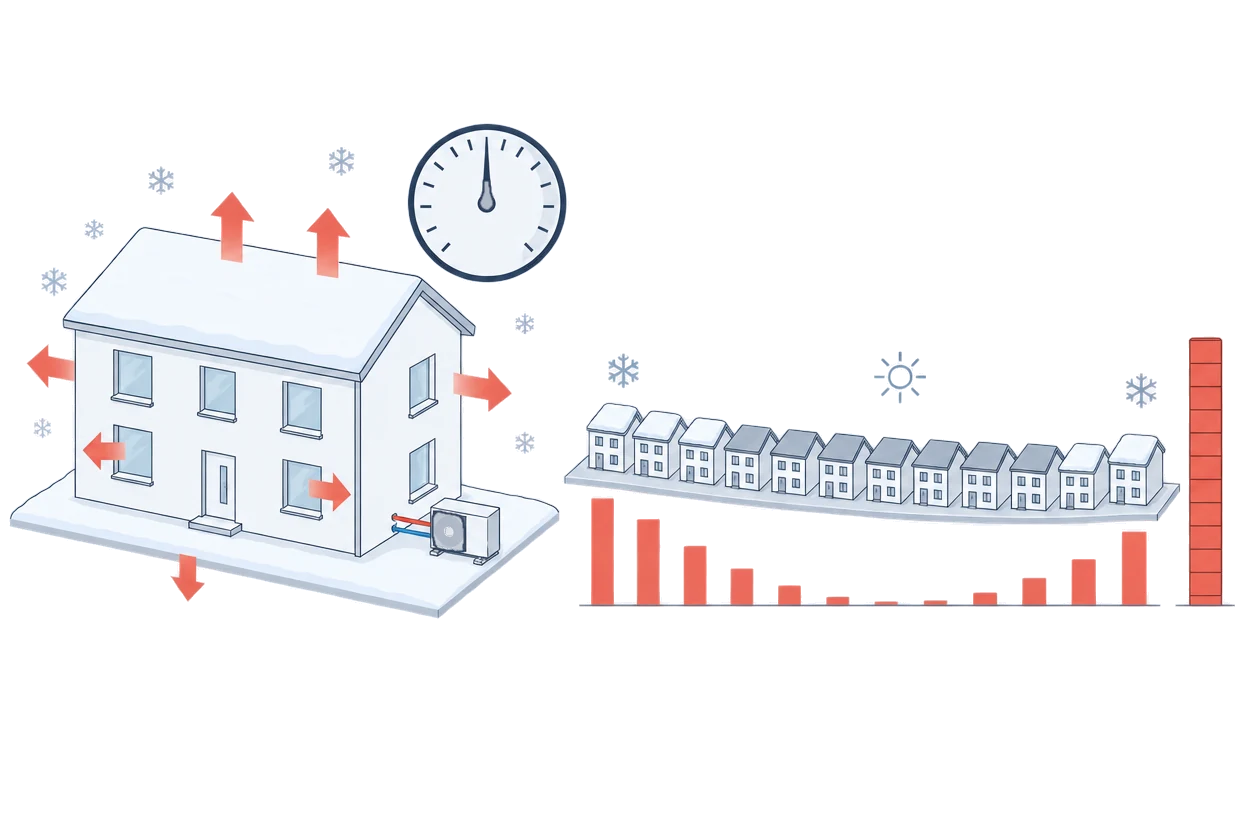
Averaged over the year, our example heat pump uses 2,884 kWh ÷ 365 days = 7.9 kWh a day at SCOP 2.8. In winter it uses far more, for two reasons:
- The house loses more heat. The colder it is outside, the more heat leaks through walls, roof and windows.
- The heat pump works less efficiently. The colder the outside air and the hotter the water it has to make, the more electricity each unit of heat takes. Weather compensation raises the water temperature only as far as the weather needs.
In summer the heat pump runs for hot water only, so most of the year's electricity goes in the coldest months.
Measure your own day. Read the heat pump's own energy reading, or your smart meter's in-home display (which covers the whole house), at the same time on two mornings; the difference is that day's use. Note the outside temperature too.
Immersion heaters and backup heaters
A heat pump's hot-water cylinder can have an electric immersion heater, and some systems also have an electric backup heater. Both turn each kWh of electricity into one kWh of heat, with no help from the outside air. That makes each unit of heat they produce nearly three times as expensive as heat from the heat pump at SCOP 2.8:
| Heat source | Cost per kWh of heatUnit rate divided by the efficiency, price cap 1 October to 31 December 2026, GB average |
|---|---|
| Gas boiler at 85% | 9.38p |
| Heat pump, SCOP 2.5 | 10.53p |
| Heat pump, SCOP 2.8 | 9.40p |
| Heat pump, SCOP 3.1 | 8.49p |
| Immersion or backup heater | 26.32p |
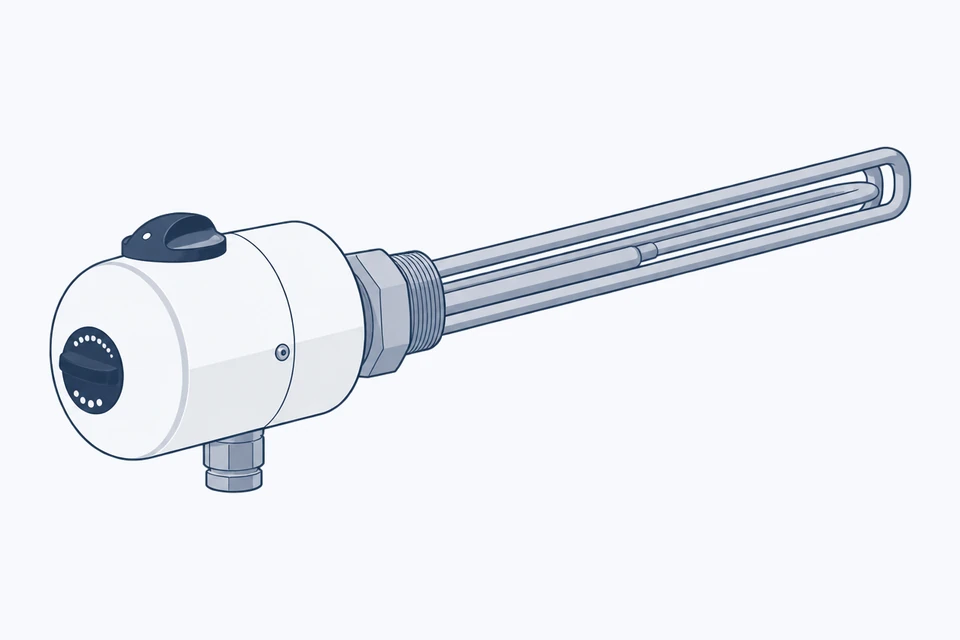
The immersion's routine job is pasteurisation: heating stored water to 60 °C now and then to control Legionella bacteria. MCS's example, a 200-litre cylinder raised from 50 °C to 60 °C weekly, uses 121 kWh a year, about £32 at 26.32p/kWh; the line is zero if the heat pump reaches that temperature itself.
Ask your installer when the immersion or backup heater switches on and whether the controls show its electricity separately. If it runs on mild days, have the settings checked: every 100 kWh it delivers costs £26 at the cap rate.
Check your own running costs after a year
Under the MCS design standard, MIS 3005-D, an MCS installer must give you a system performance estimate in writing before you award the contract. It gives the expected electricity use as a high and a low figure (10% either side of the estimate) to multiply by your unit rate. Before work starts the installer must also give you the design flow temperature and the installation's SCOP in writing.
After the first year, check what the system really achieved. If your heat pump's controller reports the heat it delivers and the electricity it uses, or meters record them, divide one by the other:
Your SCOP = heat delivered in a year (kWh) ÷ electricity used in a year (kWh)
If our example home's controller showed 8,075 kWh of heat for 3,230 kWh of electricity, the SCOP would be 2.5 and the running cost £850 rather than £759. A result well below the design figure is worth raising with the installer; flow temperature, weather compensation and immersion use are the usual settings to check.
How to lower heat pump running costs
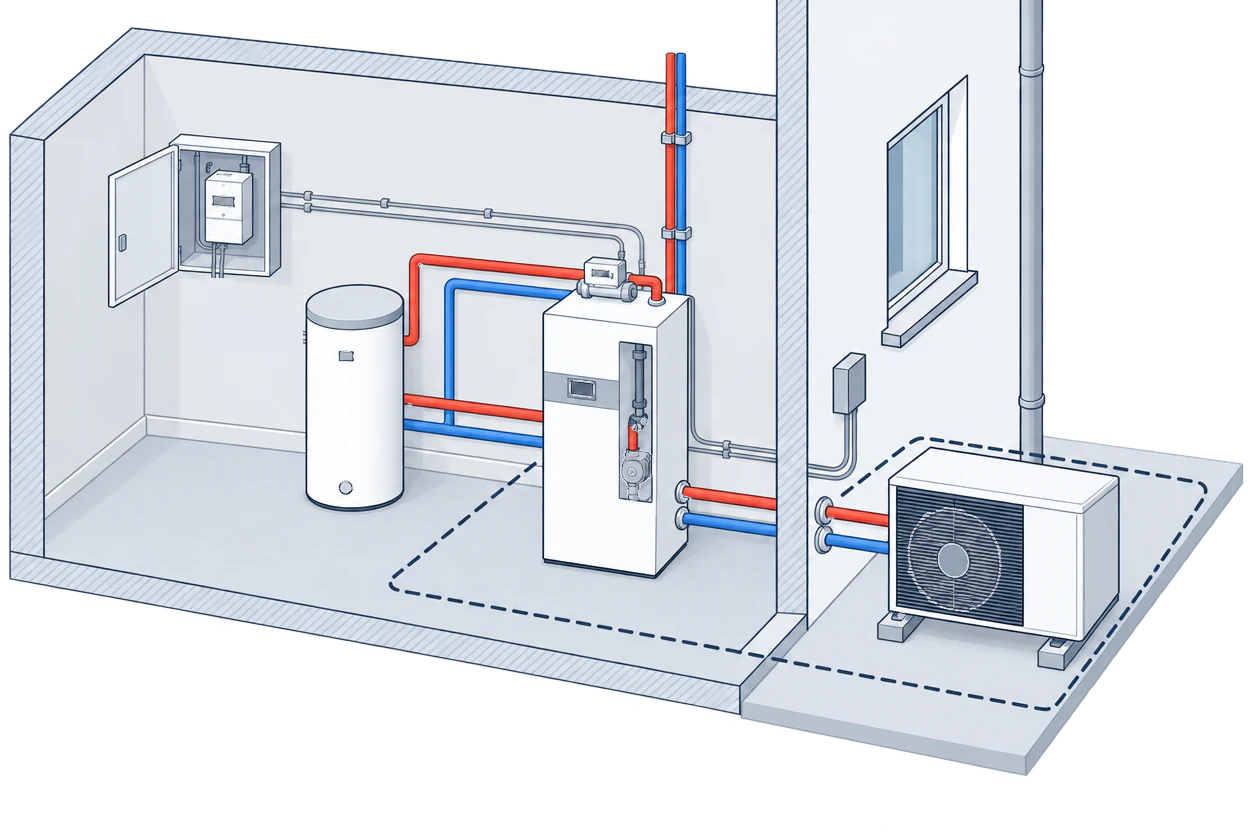
The biggest levers are set in the design; the rest are settings you control in use, or a renovation:
| Lever | What it does | WhenWhen you deal with it: in the design, in use, or at a renovation |
|---|---|---|
| Low flow temperature | Cooler water to the radiators raises the SCOP | design and use |
| Weather compensation | Water only as warm as the day needs | design and use |
| Correct sizing | Sized from a room-by-room heat-loss survey, not a guess | design |
| Hot-water settings | Store water no hotter than needed; time pasteurisation | use |
| Tariff with cheaper hours | Lowers the average rate if use shifts into them | use |
| Less heat needed | Insulation cuts the heat and can allow cooler water; in our example 10% less heat (808 kWh) is 288 kWh less electricity at SCOP 2.8, £76 a year at 26.32p | renovation |
Flow temperature. MCS's method estimates an air source heat pump's seasonal performance for space heating at 2.5 at a flow temperature of 56–60 °C, 2.8 at 51–55 °C and 3.1 at 46–50 °C, with hot water estimated separately at 1.9: design estimates, not measured results. Around SCOP 2.8, each 0.1 of SCOP is worth about £26 to £28 a year in our example (about £33 near 2.5 and £23 near 3.1). Whether your radiators can run cooler is in heat pump radiators.
Tariff. Cheaper hours help only for the share of use that falls in them, so judge a tariff on your weighted average rate, not the lowest band. Each 1p off that average is worth about £29 a year at SCOP 2.8 in our example (2,884 kWh × 1p); more in heat pump tariffs.
What a heat pump costs to buy and install is in heat pump cost.
Checklist: estimate and track your running costs
The first points are for before you sign, the last for the first year of use.
- Gas use. The average kWh from two or three annual statements, with your unit rate and both standing charges.
- Heat. Gas kWh × your boiler's efficiency (MCS uses 0.82–0.92 by age), or 85% as in our example.
- Installer's figures. The MCS performance estimate's high and low electricity figures, the design flow temperature and the SCOP in writing.
- Your rate. Your own unit rate, or the weighted average if you plan to use a tariff with cheaper hours.
- Immersion. When the immersion or backup heater switches on, and whether its electricity shows separately.
- After 12 months. Heat delivered ÷ electricity used, compared with the design SCOP.
Figures that change
| What | Value | Applies |
|---|---|---|
| Electricity unit rate | 26.32p/kWh | Ofgem price cap, GB average, direct debit, 1 October to 31 December 2026; no VAT on electricity in Great Britain until 31 March 2027 |
| Electricity standing charge | 54.83p a day | same period |
| Gas unit rate and standing charge | 7.97p/kWh and 29.68p a day | same period, 5% VAT included |
| Typical bill under the cap | £1,723 a year | 1 October to 31 December 2026, dual fuel, direct debit, Ofgem typical use |
| Ofgem typical medium use | 2,500 kWh electricity, 9,500 kWh gas | from 1 July 2026 |
| Next price cap | announced by 25 November 2026 | for 1 January to 31 March 2027 |
How we worked this out
Our example home (1970s gas semi in England, 97 m², 9,500 kWh of gas a year, 85% boiler efficiency, SCOP 2.5 / 2.8 / 3.1, all our assumptions) at Ofgem price-cap rates for 1 October to 31 December 2026, GB average, direct debit, held flat; servicing, tariffs with cheaper hours and the purchase price are left out. More in our editorial method.
Frequently asked questions
How much does an air source heat pump cost to run per month?
In our example home, about £63 a month on average at SCOP 2.8 (£759 ÷ 12), £71 at 2.5 and £57 at 3.1, at the Ofgem price cap for 1 October to 31 December 2026. That is a yearly average: winter months cost far more than summer ones, when the heat pump only heats water.
Do heat pumps use a lot of electricity?
It roughly doubles a typical home's use: our example heat pump adds 2,884 kWh a year at SCOP 2.8 to a household's typical 2,500 kWh (5,384 kWh in all). In return it replaces 9,500 kWh of gas, because each kWh of electricity becomes about 2.8 kWh of heat.
Is a heat pump cheaper to run than a gas boiler?
It depends on the efficiency and on whether you end the gas supply. At the cap for 1 October to 31 December 2026, our example heat pump is cheaper than the gas you burn above a SCOP of 2.81, or above 2.46 once the gas supply and its £108 standing charge go. Against a new boiler the break-even is higher: see heat pump vs gas boiler.
How much would running costs rise if VAT is charged on electricity again?
Ofgem's cap rates for Great Britain carry no VAT on electricity from 1 October 2026 to 31 March 2027. If 5% VAT applied again on the same rate before VAT, 26.32p would become 27.64p and our example heat pump would cost £797 a year at SCOP 2.8 instead of £759. That is arithmetic, not a forecast: the cap itself also changes every three months.
How do I know if my heat pump is using too much electricity?
Compare your own SCOP (heat delivered ÷ electricity used over a year) with the figure in your installer's written design. A result well below it is worth raising: check the flow temperature, weather compensation and whether the immersion or backup heater switches on in mild weather. Many controllers show both readings; if yours doesn't, ask your installer how to read them.
How much does a heat pump cost to run in Northern Ireland?
The same formula applies, but not the figures on this page: Northern Ireland is outside the Ofgem price cap, and Power NI's regulated domestic tariff is reviewed by the Utility Regulator. Take the heat your home needs, divide by the SCOP and multiply by the unit rate on your own electricity bill.
Read next
Reading time: 14 min
Heat pump efficiency
COP, SCOP and SPF explained with a UK datasheet, the Electrification of Heat field results (median 2.78 across 428 homes), the Boiler Upgrade Scheme's SCOP 2.8 minimum (England and Wales) and a meter-reading example.
Read moreHeat pump efficiency
Reading time: 15 min
Heat pump vs gas boiler
Heat pump vs gas boiler in our example 1970s semi: running costs at the October to December 2026 price cap against the current boiler and a new one, break-even SCOPs, the extra cost after the £7,500 grant in England and Wales if your home qualifies, payback, 20-year totals and when it isn't worth it.
Read moreHeat pump vs gas boiler
Reading time: 14 min
Heat pump tariffs
Heat pump tariffs in the UK: cheap-hour, time-of-use and half-hourly types, supplier examples as facts, and a weighted-rate test against the Ofgem price cap of 26.32p/kWh (1 October to 31 December 2026).
Read moreHeat pump tariffs
Reading time: 15 min
Heat pump radiators
Radiator output at heat-pump temperatures with Stelrad's ΔT factors, MCS room-by-room sizing, two rooms of our example semi worked through, flow temperature and England's 55 °C design rule, weather compensation, balancing and a checklist.
Read moreHeat pump radiators
Reading time: 16 min
Heat pump cost
Installed heat pump prices from the government's Boiler Upgrade Scheme statistics: the median and its range, prices by size and type, extras in older and combi homes, the grant by nation, 0% VAT to 31 March 2027 and a worked example.
Read moreHeat pump cost
Reading time: 15 min
Replacing an oil boiler with a heat pump
Replacing an oil or LPG boiler with a heat pump: the £9,000 grant for off-gas homes in England and Wales replacing oil or LPG (applications properly made 21 July 2026 to 31 March 2027), if your home qualifies, running costs against three oil prices, LPG as a formula, the oil tank and eight steps.
Read moreReplacing an oil boiler with a heat pump