Heat pump radiators: will yours work, and what flow temperature do they need?
A heat pump runs well on radiators that keep every room warm with water at 55 °C or less. Here is how much heat a radiator gives at heat-pump temperatures, how to check yours room by room, and how weather compensation and balancing keep the flow temperature low.
A heat pump works with ordinary radiators if each radiator keeps its room warm with water at 55 °C or less; the cooler the water, the less electricity it uses. Stelrad and Zehnder quote radiator output for much hotter water: by Stelrad's correction factors, a radiator rated 1,500 W gives about 578 W when its water averages 45 °C in a 21 °C room. That is why an MCS-certified installer checks every room and replaces the radiators that fall short.
At a glance
- Output falls. With water averaging 51 °C in a 21 °C room, a radiator gives about half its catalogue output; at 41 °C, under a third (Stelrad's factors).
- Room by room. From an installer certified to MCS standard MIS 3005-D Issue 3.0, you get room heat losses, radiator sizes and the design flow temperature in writing first.
- 55 °C in England. A design requirement for new or fully replaced wet heating systems (radiators or underfloor heating fed by hot-water pipes), not a legal limit for every installation.
- Cooler water, less electricity. For space heating, MCS estimates an air source SPF of 3.4 at a 41–45 °C flow and 2.8 at 51–55 °C.
- Settings matter. Weather compensation and balancing keep the flow temperature low.
Do heat pumps work with existing radiators?
Often, with a few changes. Radiators in a boiler-heated home were sized for the boiler, and their catalogue output assumes hot water: ΔT50, which Zehnder describes as water averaging 70 °C (80 °C out, 60 °C back) in a 20 °C room. With a heat pump's cooler water, the same radiator gives less heat.
MCS, the certification scheme for heat pump installers, says keeping every existing radiator unchanged at low flow temperatures is "unlikely to be viable" unless they are significantly oversized for the old boiler. If none or very few are replaced, the installer's performance estimate must assume a 60 °C flow unless a room-by-room heat-loss calculation justifies lower. Radiators with output to spare can stay; undersized ones are swapped. For a rough cold-day check, see is my home suitable for a heat pump.
How much heat a radiator gives at heat-pump temperatures
Output depends on a radiator's size and on ΔT (delta T): the mean water temperature, half of flow plus return, minus the room temperature. Stelrad and Zehnder quote output at ΔT50; Zehnder's figures are tested to the European standard EN 442. Stelrad publishes factors for other ΔTs, based on an average radiator exponent of 1.3:
Output = ΔT50 rating × (ΔT ÷ 50)^1.3
| ΔT | Mean waterMean of flow and return temperature that gives this ΔT in a 21 °C living room | Factor | 1,500 W radiator |
|---|---|---|---|
| 50 | 71 °C | 1 | 1,500 W |
| 30 | 51 °C | 0.515 | 773 W |
| 25 | 46 °C | 0.406 | 609 W |
| 20 | 41 °C | 0.304 | 456 W |
Radiator output, % of its ΔT50 rating
| ΔT | Share of ΔT50 output |
|---|---|
| ΔT50 | 100% |
| ΔT30 | 51.5% |
| ΔT25 | 40.6% |
| ΔT20 | 30.4% |
The same 1,500 W radiator in a 21 °C room:
- Water averaging 45 °C (ΔT24): 1,500 × 0.385 = about 578 W.
- 45 °C flow, 40 °C return (ΔT21.5): 1,500 × 0.334 = about 501 W.
- 55 °C flow, 50 °C return (ΔT31.5): 1,500 × 0.548 = about 822 W.
So a radiator sized for a boiler gives roughly a third to just over half of its label.
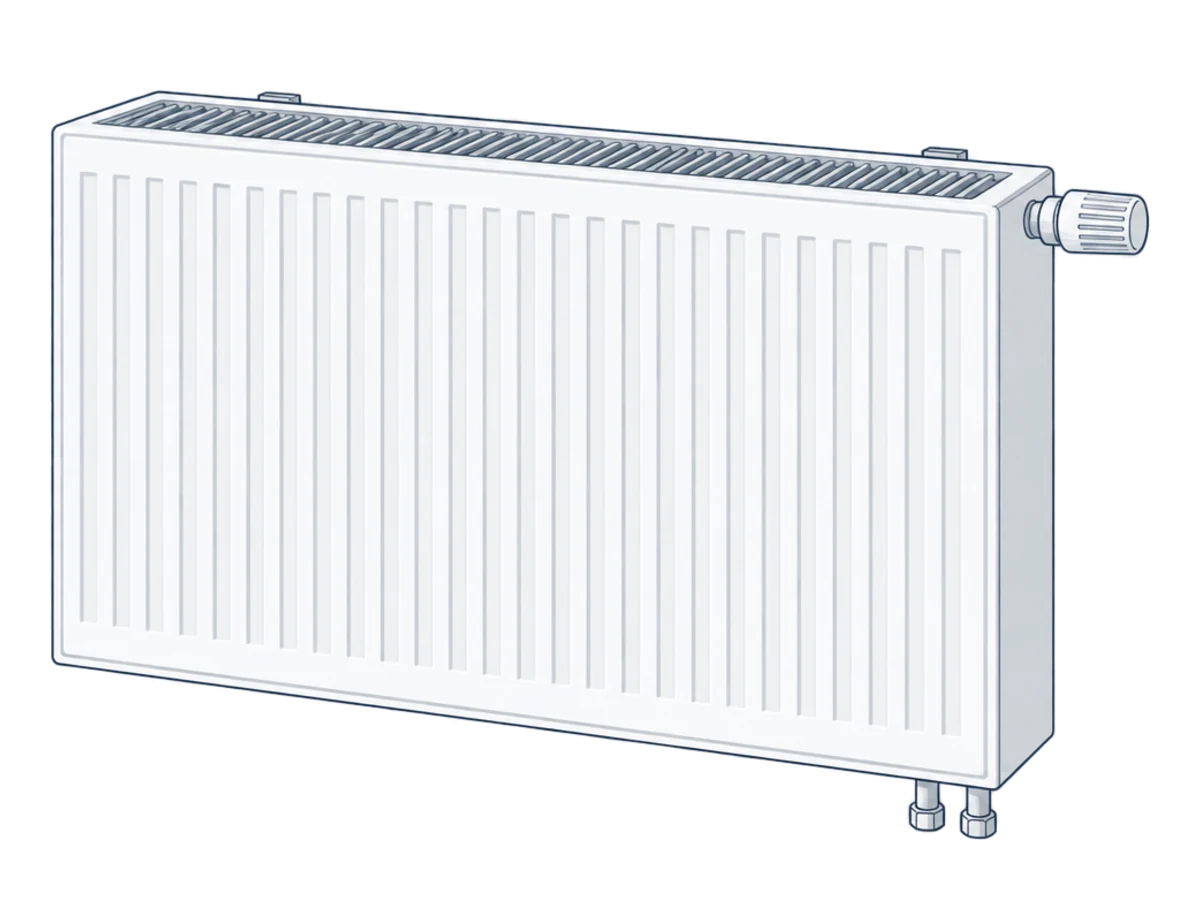
Heat pump radiator sizing, room by room
The installer works out each room's heat loss at MCS's set room temperatures, as explained in heat pump sizing, and compares it with each radiator's output at the design temperature. An installer certified to MIS 3005-D Issue 3.0 must give you this in writing before installation: every room's heat loss, each radiator's type and size and the design flow temperature. Radiators are where it bites: the worst-performing room sets the water temperature for the whole house, so one undersized radiator keeps every room on hotter water than it needs. To size a new radiator, divide the room's heat loss by the factor for your design temperature and choose that ΔT50 rating; the radiator's own datasheet wins.
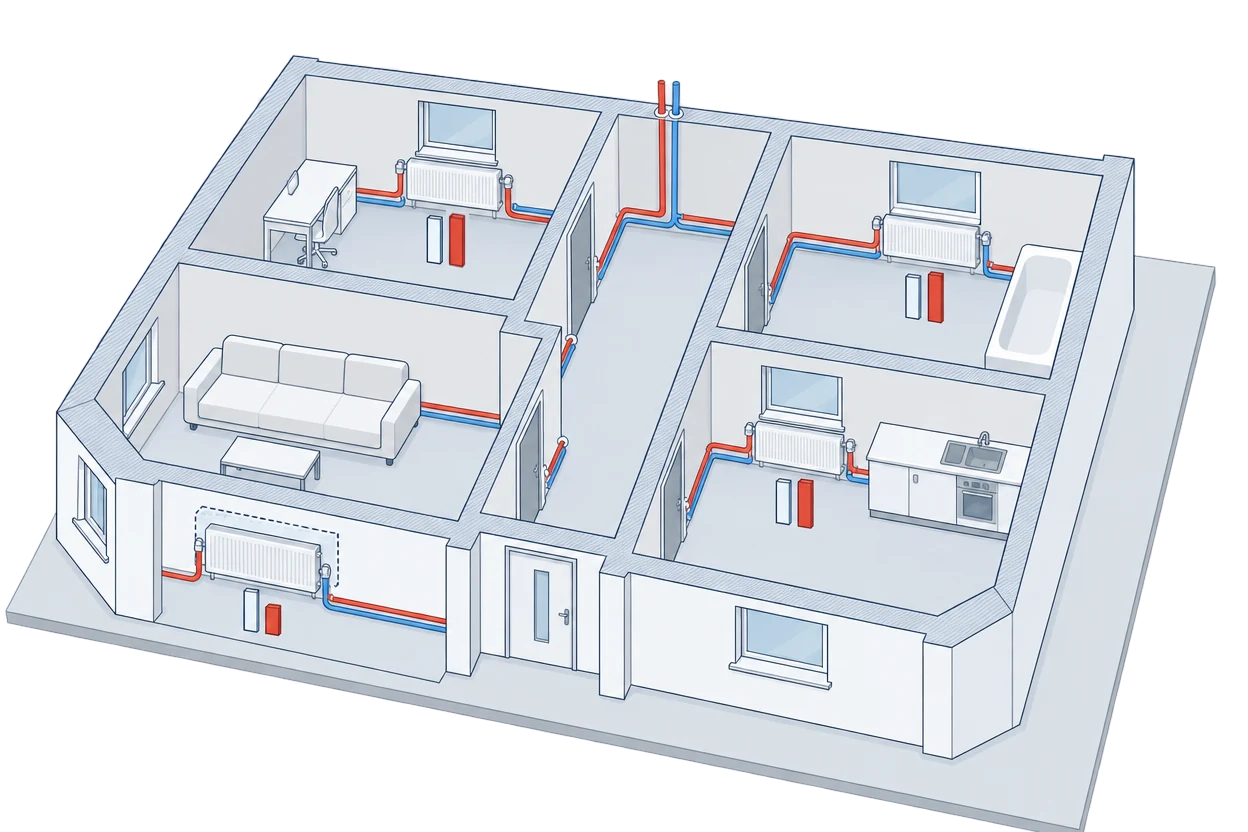
Worked example: two rooms in our example home
Our example home is an assumption: a 1970s semi-detached house in England with radiators and a gas combi boiler, 97 m², using 9,500 kWh of gas a year. The two rooms and their radiators are our assumptions too, at MCS's design room temperatures of 21 °C for living rooms and 18 °C for bedrooms.
| Room | Heat loss | RadiatorOutput stated by the manufacturer at ΔT50 | At 55 °C55 °C flow, 50 °C return | At 45 °C45 °C flow, 40 °C return |
|---|---|---|---|---|
| Living room, 21 °C | 800 W | 1,500 W | 1,500 × 0.548 = 822 W: enough | 1,500 × 0.334 = 501 W: 299 W short |
| Bedroom, 18 °C | 400 W | 1,100 W | 1,100 × 0.617 = 679 W: enough | 1,100 × 0.396 = 436 W: enough |
| Living room, new radiator | 800 W | 2,400 W | – | 2,400 × 0.334 = 802 W: enough |
- Keep both, run at 55 °C. Both rooms stay warm. MCS's space-heating estimate for an air source heat pump at a 51–55 °C flow is an SPF (seasonal performance factor: heat delivered for each unit of electricity over a season) of 2.8, with a warning that running costs may be high without design changes.
- Replace one, run at 45 °C. The living room needs 800 ÷ 0.334 ≈ 2,400 W at ΔT50, 1.6 times the old one: a deeper or longer model, or a second radiator. The bedroom's oversized radiator still copes. MCS's estimate for a 41–45 °C flow is an SPF of 3.4.
- The electricity difference. 1,000 kWh of space heating takes 1,000 ÷ 2.8 = 357 kWh of electricity at 55 °C and 1,000 ÷ 3.4 = 294 kWh at 45 °C, about a fifth more at 55 °C (357 ÷ 294 = 1.21). These are MCS design estimates; measured results are on heat pump efficiency.
Ask for each replacement as its own quote line; whole-job prices are in heat pump cost.
Heat pump flow temperature: what to aim for
A heat pump should run at 55 °C or lower on the coldest design day and cooler still on milder days. The flow temperature is the temperature of the water leaving the heat pump, and the lower it can be while every room stays warm, the less electricity the same heat takes. MCS's space-heating estimates for an air source heat pump show the size of it: an SPF of 3.4 at a 41–45 °C flow against 2.8 at 51–55 °C, as in the example above. Datasheet SCOPs at 35 °C and 55 °C are explained in heat pump efficiency.
The 55 °C rule in England. Approved Document L says that where a wet heating system is newly installed, or fully replaced including the heating appliance, radiators and pipework, every part should be sized to heat the home at a flow temperature of 55 °C or lower, or, where that isn't feasible (no space for larger radiators, say), the lowest temperature that works. It covers space heating, not hot water. A full replacement there means the heating appliance, radiators and pipework together. On our reading, a heat pump fitted to existing radiators and pipes falls outside that description, so 55 °C is a design requirement for whole-system replacements, not a legal limit on every installation; ask your installer, or building control, which applies to your job. Wales, Scotland and Northern Ireland have their own building regulations, so the design temperature there is a question for your installer too.
Above 55 °C. Under MIS 3005-D, high-temperature heat pumps should be avoided unless a flow above 55 °C is needed, and a design above 55 °C should come with an alternative at 55 °C or lower, with the difference in efficiency and energy use explained to you so you can choose.
Weather compensation: lower temperatures on milder days
The design flow temperature is for the coldest design day. Weather compensation runs the heat pump cooler the rest of the time: an outdoor sensor reports the temperature and the controller sets the flow temperature from a curve, often called the heating curve: warmer water when it is cold, cooler when it is mild.
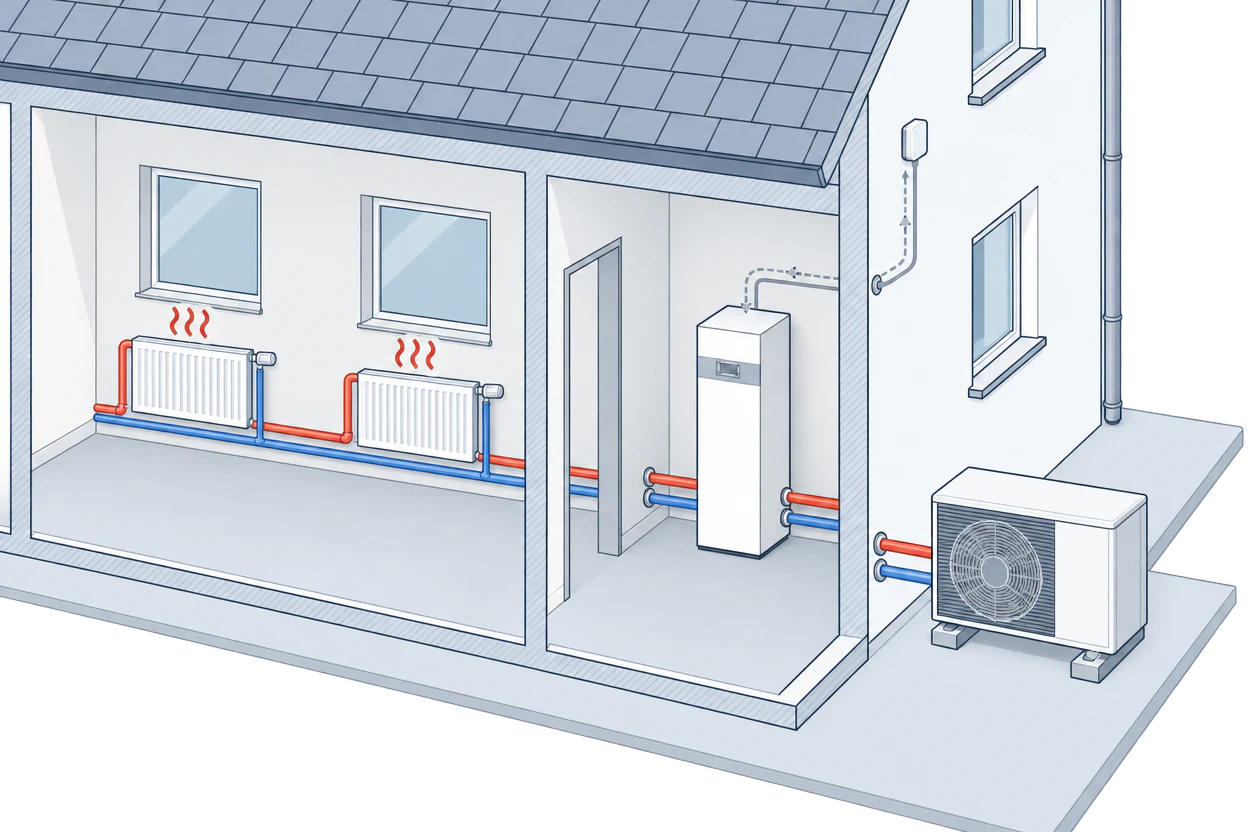
The slope sets how fast the flow temperature rises as it gets colder; the offset moves the whole curve up or down. Names and scales differ between controllers.
In England, Approved Document L asks for heat pump controls with weather compensation or internal temperature control, plus a timer or programmer. MCS's installation standard, MIS 3005-I, says weather compensation should be enabled where it can optimise efficiency; an installer who leaves it off may be expected to explain why.
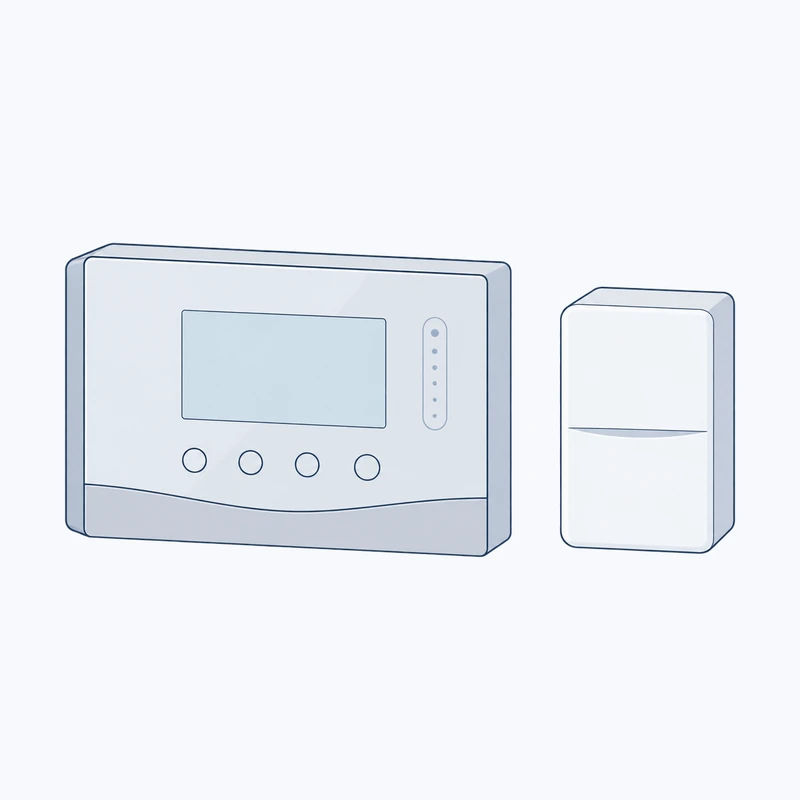
The installer sets the curve at commissioning. To fine-tune it later, this is our suggested routine; agree it with your installer first:
- Note the start. Open the TRVs fully in the rooms you use most, then write down the settings you may change and their values.
- Change one thing, a little. Every room too warm: lower the curve a small step. Whole house cool: raise it a step.
- Give it a day. Judge a change after a full day, noting the outdoor temperature.
- Repeat in other weather. Slope for cold days, offset for mild ones.
Setback and thermostats (our suggestion). A heat pump works best running steadily at a low flow temperature, so a deep overnight setback can cost more than it saves: the system then has to work harder, often with hotter water, to bring the house back up. Keep the TRVs open in the rooms you use most and use them, or a timer, to keep rarely used rooms cooler. Agree your schedule with your installer, especially with underfloor heating, which reacts slowly.
Balancing your radiators
In an unbalanced system the radiators nearest the heat pump get more water than they need and the furthest get too little. Turning up the flow temperature to compensate raises running costs without fixing the cause. Balancing sets each radiator's flow to match its room. Signs it is missing: far rooms never quite warm up, rushing noises at valves, no balancing record in your handover papers.
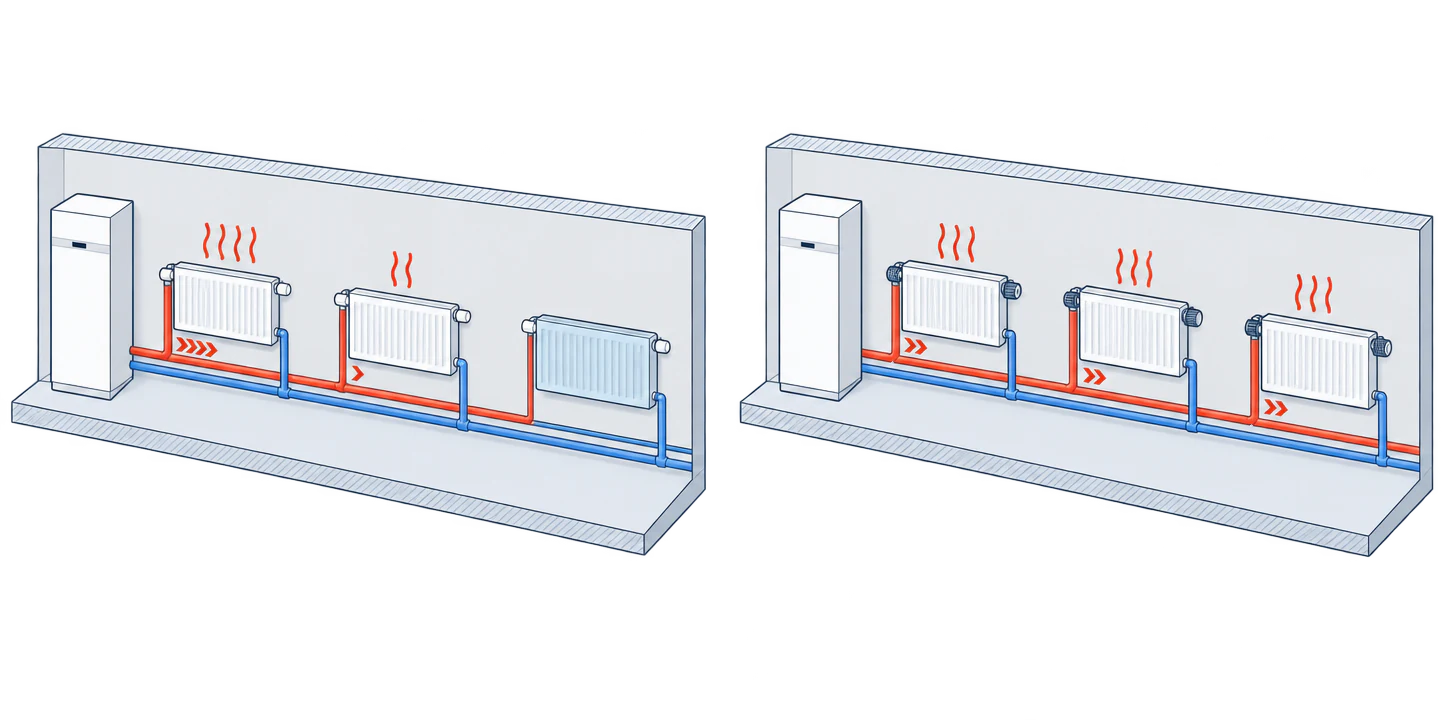
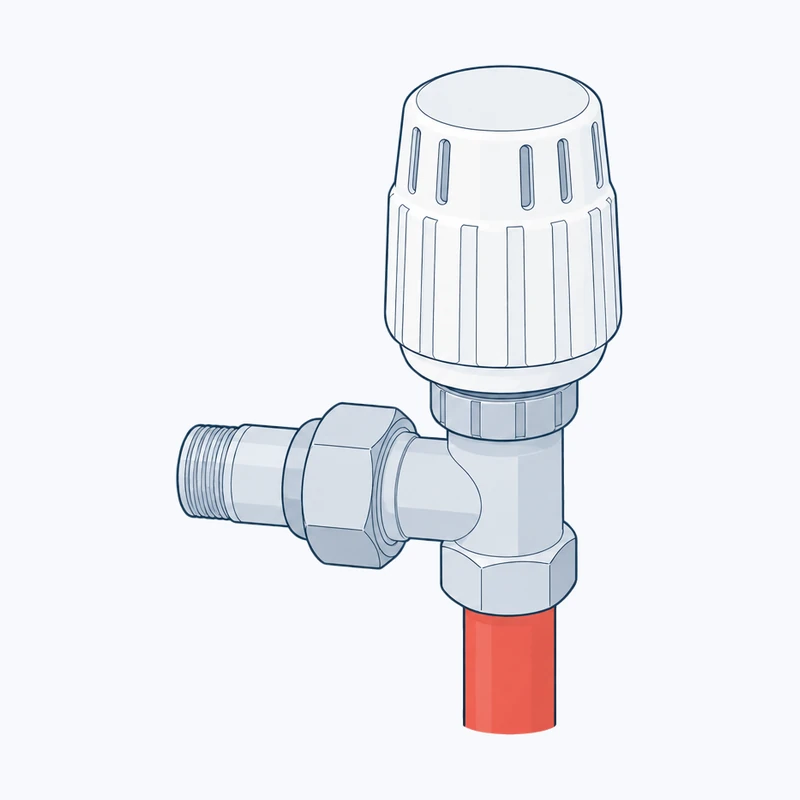
A radiator usually has a thermostatic valve (TRV) on one side and a lockshield valve on the other. The installer works through it like this:
- Flow per radiator. From each room's heat loss, how much water its radiator needs.
- Valves set. Lockshields, or TRVs with a preset, adjusted until every radiator warms evenly with a similar drop from flow to return.
- Controls set. Weather compensation curve and pump setting matched to the design.
- Recorded. Values on the commissioning checklist in your handover pack.
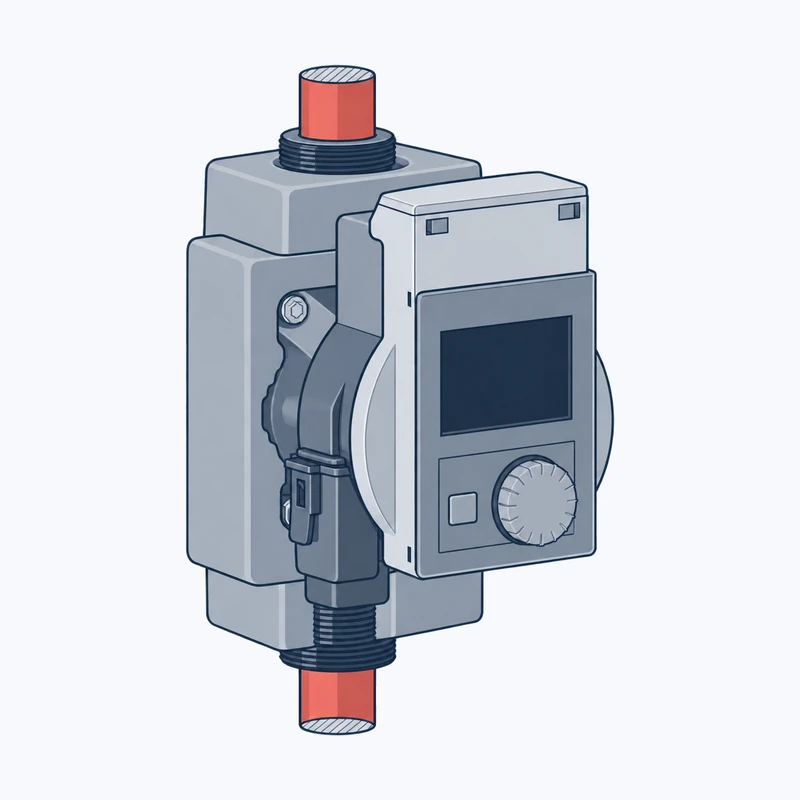
MCS's example commissioning checklist asks whether all radiators heat up evenly with a similar temperature difference across flow and return, and records the expansion vessel pre-charge and pump setting. In England, Approved Document L adds that heating circuits should be flushed, with an inhibitor added, before a new heating appliance goes in.

Heat pump compatible radiators: bigger panels and other options
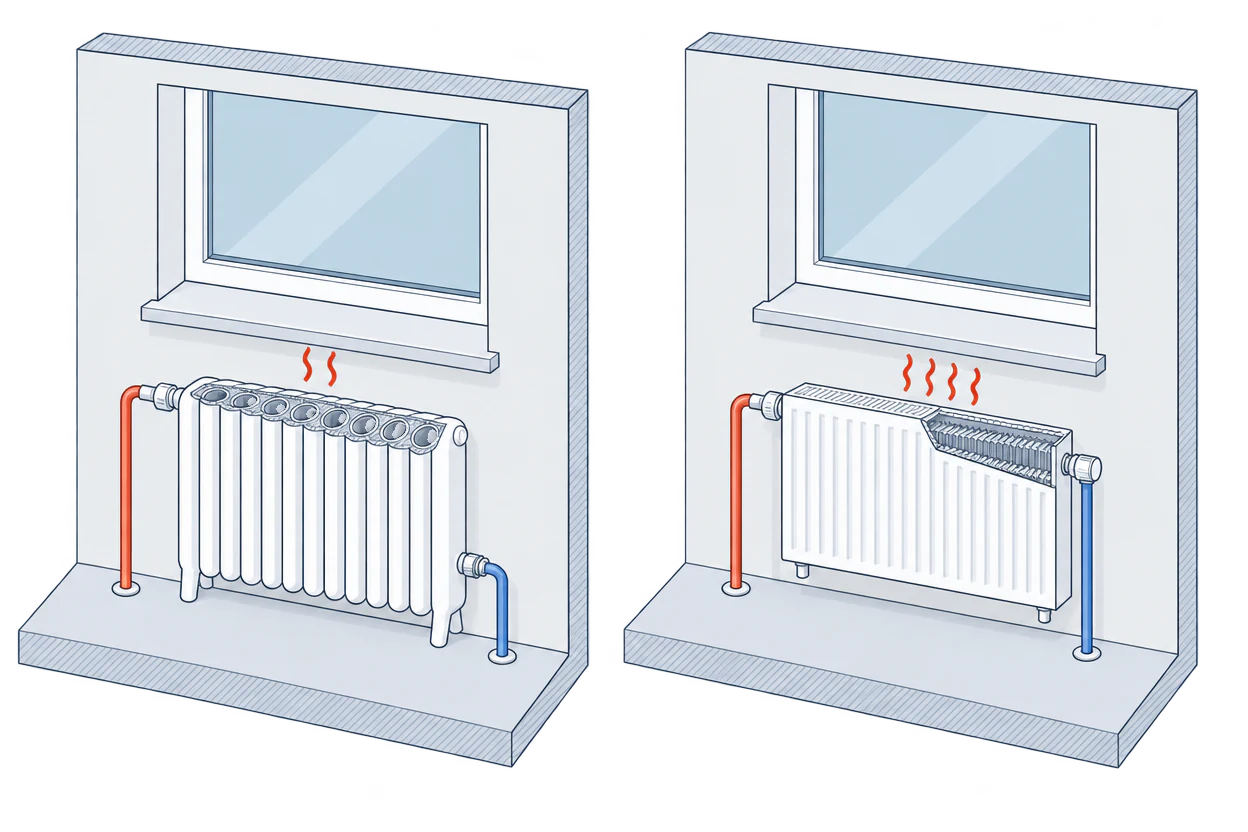
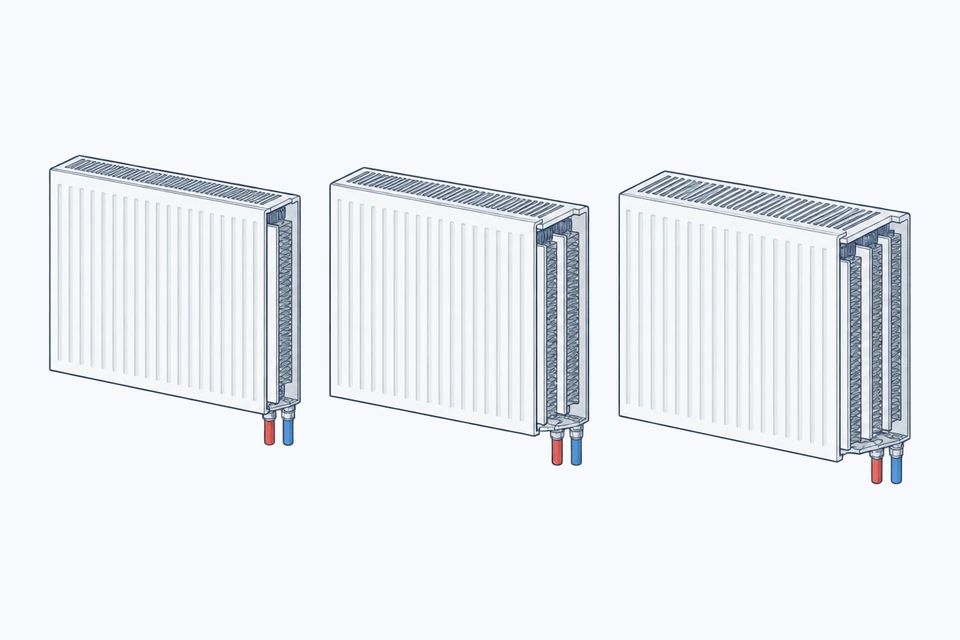
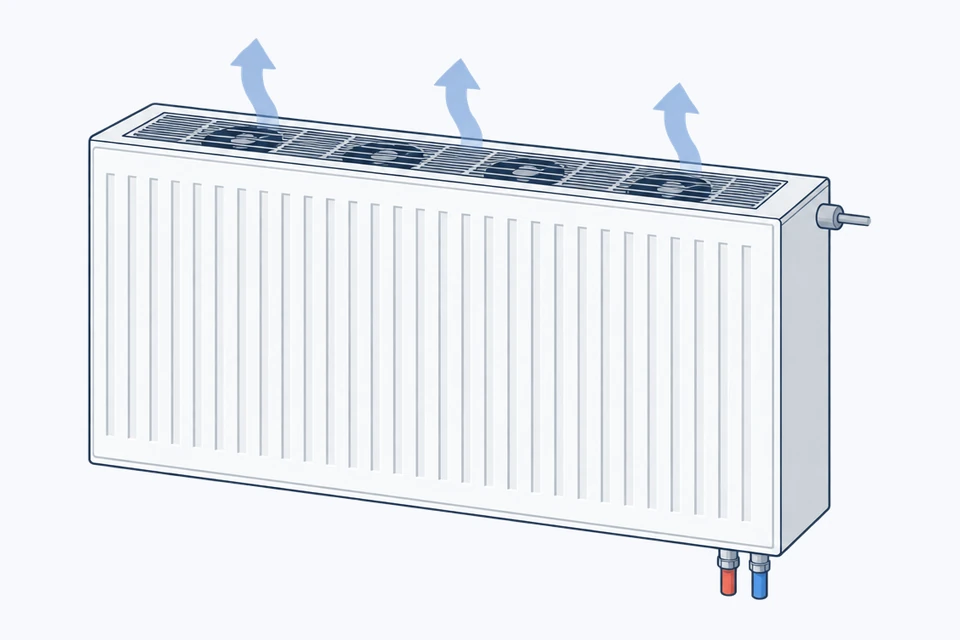
If a radiator can't heat its room at the planned flow temperature, there are four routes:
| Option | Suits when | Work | Check |
|---|---|---|---|
| Keep the radiator | its output at the design temperature covers the room | balancing and settings only | output at design temperature in writing |
| Bigger radiator | there is wall space for a longer or deeper model | swap on the same wall | ΔT50 rating ÷ factor covers the room |
| Fan-assisted radiator | a room needs more heat from the same wall space | electrical supply, some fan noise | output at your design temperature and fan noise at night |
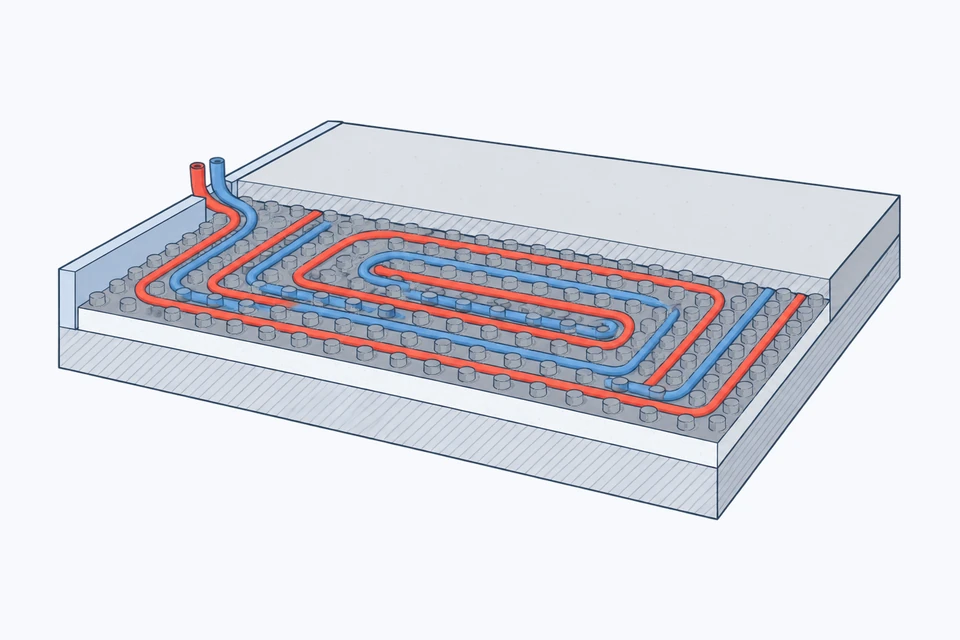
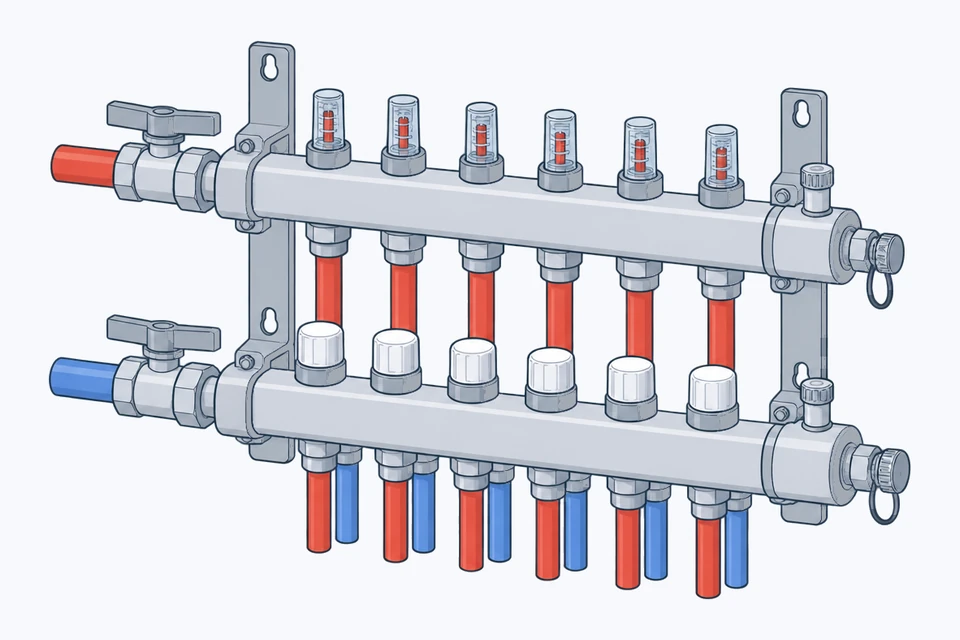
| Underfloor heating | floors are being renewed anyway | lifting floors, screed or boards | floor covering and insulation |
A bigger radiator is the most direct fix, sized to the room's heat loss, not to the old radiator. A fan-assisted radiator uses small fans to push more air across its fins; MCS's reference guide says it gives more heat than a standard radiator of the same size. And cutting a room's heat loss, through insulation or draught-proofing, lets the same radiator manage at a lower temperature. For a bathroom you want warmer than the rest of the house, an electric towel rail on its own timer avoids raising the flow temperature for every room.
In England and Wales the £7,500 Boiler Upgrade Scheme grant, if your home qualifies, is a fixed sum, so extra radiators add to your share of the bill; see heat pump grants.
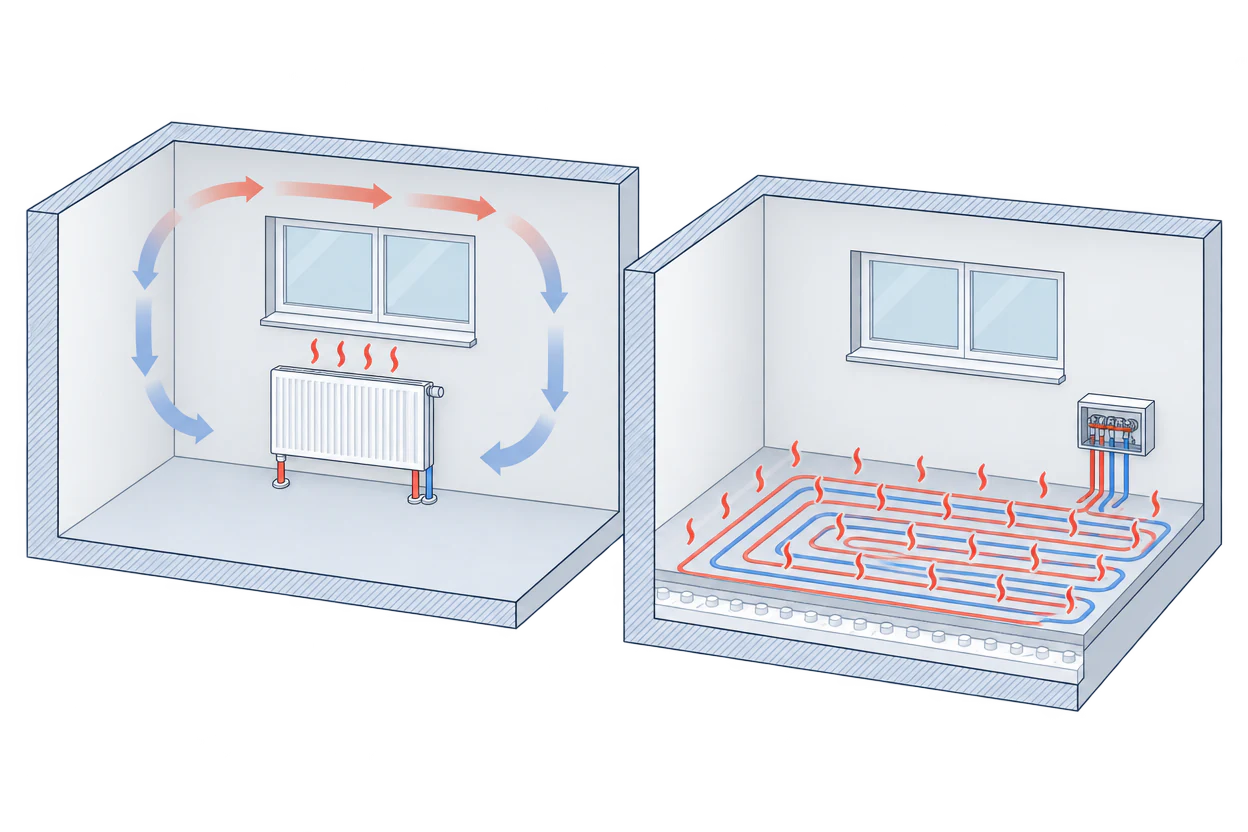
Radiators or underfloor heating?
Underfloor heating spreads heat over the whole floor, so it runs at the lowest flow temperatures: in MCS's emitter guide a flow up to 35 °C earns the top six-star rating. You don't need it for a heat pump, but it is worth considering where a floor is coming up anyway; MCS notes that under wood or carpet, extra measures such as better insulation are likely to be needed.
Checklist: radiators in your heat pump quote
- Room heat losses. In writing for every room, before work starts.
- Radiator list. Each radiator's output at the design temperature beside its room's heat loss.
- Flow temperature. The design figure and the SCOP at it; above 55 °C, the alternative design.
- Replacements. Which radiators change, to what size, each as its own quote line.
- Weather compensation. Switched on, or the reason it stays off explained; settings written down and shown to you.
- Balancing and flushing. Recorded on the commissioning checklist in your handover pack.
How to compare installers and their quotes is covered in choosing an MCS installer.
Figures that change
| What | Value | Applies |
|---|---|---|
| Maximum design flow temperature, new or fully replaced wet systems | 55 °C or lower (lowest feasible otherwise) | England, Approved Document L 2021 edition with 2023 amendments; new Approved Document L guidance applies to building work in England from 24 March 2027, transitional cases aside |
| Boiler Upgrade Scheme grant, air source | £7,500 if the home qualifies | England and Wales |
How we worked this out
Radiator outputs use Stelrad's ΔT correction factors (exponent 1.3); the two rooms and radiators in our example 1970s semi are our assumptions at MCS's design room temperatures, and the electricity figures are MCS design estimates, not measurements. More in our editorial method.
Frequently asked questions
Do I need special or low-temperature radiators for a heat pump?
No special type is needed for an air source heat pump: what counts is whether each radiator gives enough heat for its room at your design flow temperature. A larger panel, a double or triple panel, or a fan-assisted radiator gives more heat from the same wall space, and a radiator that already has enough output can stay. Ask for each radiator's output at the design temperature, not for a product label.
What flow temperature should a heat pump run at?
The lowest that keeps every room warm: on the coldest day, 55 °C or lower; most of the winter, lower, with weather compensation doing the adjusting. For space heating, MCS estimates an air source SPF of 3.4 at a 41–45 °C flow against 2.8 at 51–55 °C, so each step down saves electricity for the same heat.
Should I turn my radiator thermostats up with a heat pump?
Not to heat a room faster. A thermostatic radiator valve (TRV) sets the room temperature, not the water temperature, and the heat pump simply runs for longer at a low output. Our suggestion: set each TRV to the room temperature you want, keep those in your main rooms fully open while the heating curve is tuned, and if a room stays cool, ask for its radiator and balancing to be checked rather than raising the flow temperature for the whole house.
Can I balance my radiators myself?
Bleeding a radiator and turning a TRV are routine jobs, but setting the lockshield valves to the flow each room needs depends on the room heat losses. With a heat pump, our advice is to leave it to the installer and ask for the settings on the commissioning checklist. Balancing by feel can leave the far rooms short and tempt you to raise the flow temperature.
Why are my radiators only warm, not hot, with a heat pump?
Because they are designed to be. Water at 55 °C or less makes a radiator feel warm rather than hot, and the heat pump runs for longer at a lower output instead of in short hot bursts. What matters is whether the room reaches its temperature; if one room doesn't, have its radiator and balancing checked before turning up the flow temperature.
Read next
Reading time: 15 min
Is my home suitable for a heat pump?
How to tell whether your home suits a heat pump: gas use per m², a cold-day radiator test and the MCS room-by-room survey, older and solid-walled homes, space and planning, insulation and grants by nation.
Read moreIs my home suitable for a heat pump?
Reading time: 15 min
Heat pump sizing
Heat pump sizing explained: heat loss vs heat demand, MCS's room-by-room method (MIS 3005-D), design temperatures from Plymouth to Glasgow, a bill-based check on our example semi, backup heaters, hybrids and a checklist for the heat loss report.
Read moreHeat pump sizing
Reading time: 14 min
Heat pump efficiency
COP, SCOP and SPF explained with a UK datasheet, the Electrification of Heat field results (median 2.78 across 428 homes), the Boiler Upgrade Scheme's SCOP 2.8 minimum (England and Wales) and a meter-reading example.
Read moreHeat pump efficiency
Reading time: 16 min
Heat pump cost
Installed heat pump prices from the government's Boiler Upgrade Scheme statistics: the median and its range, prices by size and type, extras in older and combi homes, the grant by nation, 0% VAT to 31 March 2027 and a worked example.
Read moreHeat pump cost
Reading time: 16 min
Heat pump grants
The Boiler Upgrade Scheme in full: amounts in England and Wales, the £9,000 for oil or LPG homes to 31 March 2027, who qualifies, the six steps from quote to voucher, Scotland and Northern Ireland, loans and 0% VAT to 31 March 2027.
Read moreHeat pump grants
Reading time: 15 min
Heat pump installers
How to choose an MCS-certified heat pump installer: checking certification and consumer-code membership, what a complete quote and design must show, warning signs, deposit protection under RECC and HIES, and cancellation rights.
Read moreHeat pump installers